By Lily O’Delia
There is a moment in Will Hermes’ Lou Reed: The King of New York when the sheer difficulty of writing about Lou Reed becomes apparent. Reed spent much of his life making himself difficult to know. He could be tender and vicious, funny and exhausting, generous one moment and cruel the next. He understood the usefulness of a persona and spent decades feeding his own. At various points, even Reed seemed unsure where the performance stopped.
Hermes does something harder than trying to solve him. He allows Lou Reed to remain contradictory.
Published in 2023, ten years after Reed’s death, The King of New York benefits from both distance and extraordinary access. Hermes spent years researching the book and made extensive use of the Lou Reed Archive at the New York Public Library for the Performing Arts, digging through material that had previously been unavailable to biographers. He also sought out people who knew Reed across different periods of his life, including Billy Name and Hal Willner. The result is a biography with the density of an archive without feeling buried beneath one.
The title comes from David Bowie, but by the end of the book it feels inevitable. New York is everywhere in Reed’s story. He was born in Brooklyn, raised on Long Island and eventually found the city where his appetite for literature, noise, sex, drugs, art and provocation could become useful. Hermes has called Reed one of the quintessential New Yorkers, and the biography makes a convincing case for it.
Reed’s New York was populated by people who were rarely granted much dignity in popular music. Drug users, hustlers, queer people, trans people, addicts, artists and people living beyond respectable society appeared in his songs as human beings rather than warnings. Long before rock music became comfortable advertising its transgressions, Reed was writing about lives most radio programmers would have preferred not to acknowledge.
Hermes understands how radical that was without turning Reed into a prophet who somehow anticipated every cultural conversation that followed. What mattered was his curiosity. Reed looked where other songwriters did not, and he believed rock lyrics could carry the same complications he admired in literature. His time at Syracuse University, where he studied with poet Delmore Schwartz, becomes particularly important in Hermes’ account because Reed’s literary ambition never really left him. The electric guitar became another way to pursue it.
Then came the Velvet Underground.
So much has been written about the band that another retelling of Andy Warhol, Nico, John Cale and the Factory could easily feel embalmed in rock history. Hermes manages to make the familiar story exciting again because he restores the uncertainty. Nobody inside those rooms knew that The Velvet Underground & Nico would eventually become a sacred object. They were making strange records that relatively few people bought.
It is easier, fifty years later, to hear inevitability in influential music. Hermes gives the risk back to it.
The Velvet Underground could be brutal, but Reed was just as capable of writing something as delicate as “Pale Blue Eyes” or “I’ll Be Your Mirror.” That tension followed him for the rest of his career. The man responsible for the beautiful simplicity of “Perfect Day” also made Metal Machine Music, an album of feedback that still sounds like an argument someone refused to stop having.
Hermes is especially good when dealing with those contradictions because he doesn’t try to make Reed more agreeable than he was.
Reed could behave terribly. He could humiliate people. His relationships could become chaotic and destructive. Addiction consumed stretches of his life, and fame did not necessarily make him kinder. Hermes gives these things space without allowing them to become the only explanation for the work. That balance is one reason the biography was received so warmly; contemporary reviews repeatedly praised Hermes for managing the distance between Reed the person and Reed the carefully cultivated public figure.
There is also something refreshing about a biography willing to admit that talent does not confer goodness. Reed does not need to be made lovable for “Heroin” to remain extraordinary. Nor does acknowledging the damage he caused require pretending the tenderness in his music was fraudulent. Human beings are rarely that tidy.
His sexuality receives the same care. Reed had relationships with men and women, and Hermes places those relationships within a period when sexuality and gender were being lived with considerably more complexity than mainstream culture acknowledged. Reed’s relationship with Rachel Humphreys, a trans woman with whom he lived during the 1970s, is part of that history. Hermes doesn’t treat Rachel as an exotic footnote in the life of a famous man. Her presence complicates any easy attempt to package Reed’s sexuality into a category convenient for posterity.
Pitchfork singled out this quality when it named the biography among the best music books of 2023, noting that Hermes connects the sexual and gender fluidity surrounding Reed to cultural changes that would become far more visible decades later.
And through all of it, Reed keeps making records.
Some succeed brilliantly. Some don’t. Some seem almost designed to test how far an audience’s loyalty can stretch. That unevenness makes the story better. Hermes doesn’t write Reed’s career as a steady march toward canonization. Reed followed Transformer with Berlin. He moved through glam, noise, rock, spoken word and increasingly direct writing about New York, politics, death and aging. Later there would be Songs for Drella with John Cale, New York, Magic and Loss, and, near the end of his life, the wonderfully divisive Lulu with Metallica.
The failures belong here too because Reed’s willingness to risk making something ridiculous was inseparable from his ability to make something extraordinary. A career containing only tasteful decisions would have been unimaginable for him.
As Reed gets older, The King of New York becomes unexpectedly moving. The provocateur survives long enough to confront aging, sobriety and the deaths of people who helped create the world he came from. His relationship with Laurie Anderson introduces a different Reed without pretending the old one disappeared.
By then, New York has changed too. Warhol is dead. The Factory belongs to history. The dangerous little band that sold comparatively few records has become one of the most influential groups in rock music. Reed, who spent so much of his career antagonizing audiences and critics, has become an institution.
There is a peculiar sadness in watching someone outlive their rebellion long enough to see it become canon.
That may be Hermes’ greatest achievement here. He gives us the canonical Lou Reed without allowing the canon to swallow the person. Reed is still annoying. Still funny. Still vain. Still capable of affection. Still capable of cruelty. Still chasing sounds. Still obsessed with being taken seriously as a writer. Still changing his mind about who Lou Reed was supposed to be.
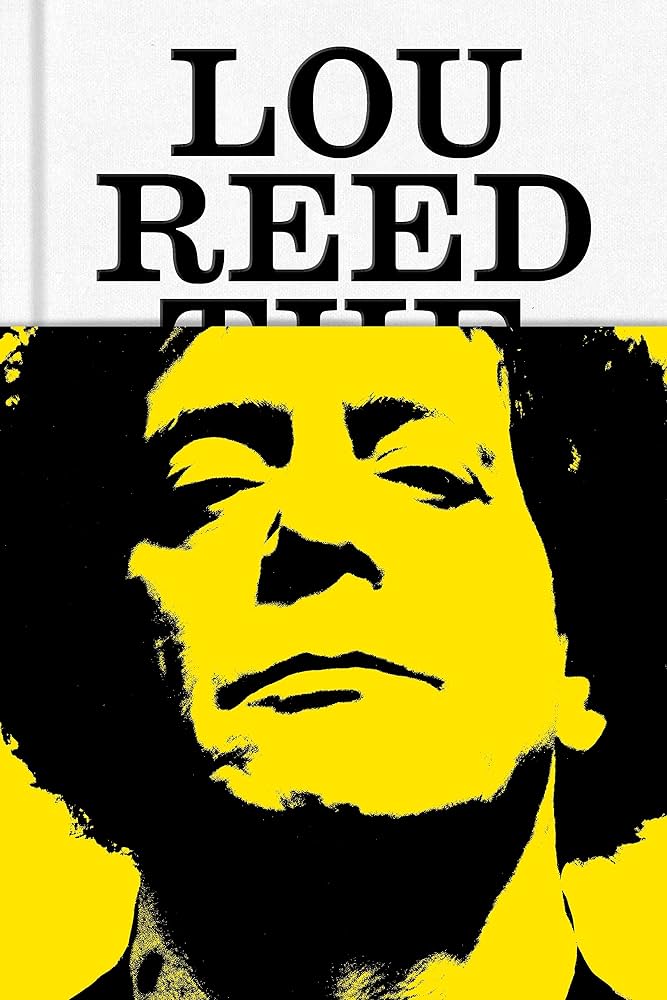
The book is substantial at 560 pages, yet its length feels justified because Reed’s life refuses compression. The Velvet Underground alone could fill a biography, and for Hermes it is merely the beginning. The research is meticulous, but the affection underneath it keeps the book from reading like an inventory of cultural importance. Hermes clearly loves Reed’s music. More importantly, he trusts it enough not to protect its creator. The New York Public Library itself noted how extensively he drew from Reed’s archive, while critical reception was overwhelmingly favorable; Book Marks classified the consensus from major reviews as “Rave.”
For readers who already love Lou Reed, The King of New York offers the pleasure of discovering that the familiar story was stranger than we thought. For someone encountering him primarily as the leather-jacketed face behind “Walk on the Wild Side,” it makes clear how inadequate that image is.
Lou Reed spent his life writing about people who could not be contained by the stories others told about them. It seems appropriate that he couldn’t be contained by his own mythology either.
By the end of The King of New York, Hermes hasn’t explained Lou Reed. He has done something better. He has made him human again.















+ There are no comments
Add yours