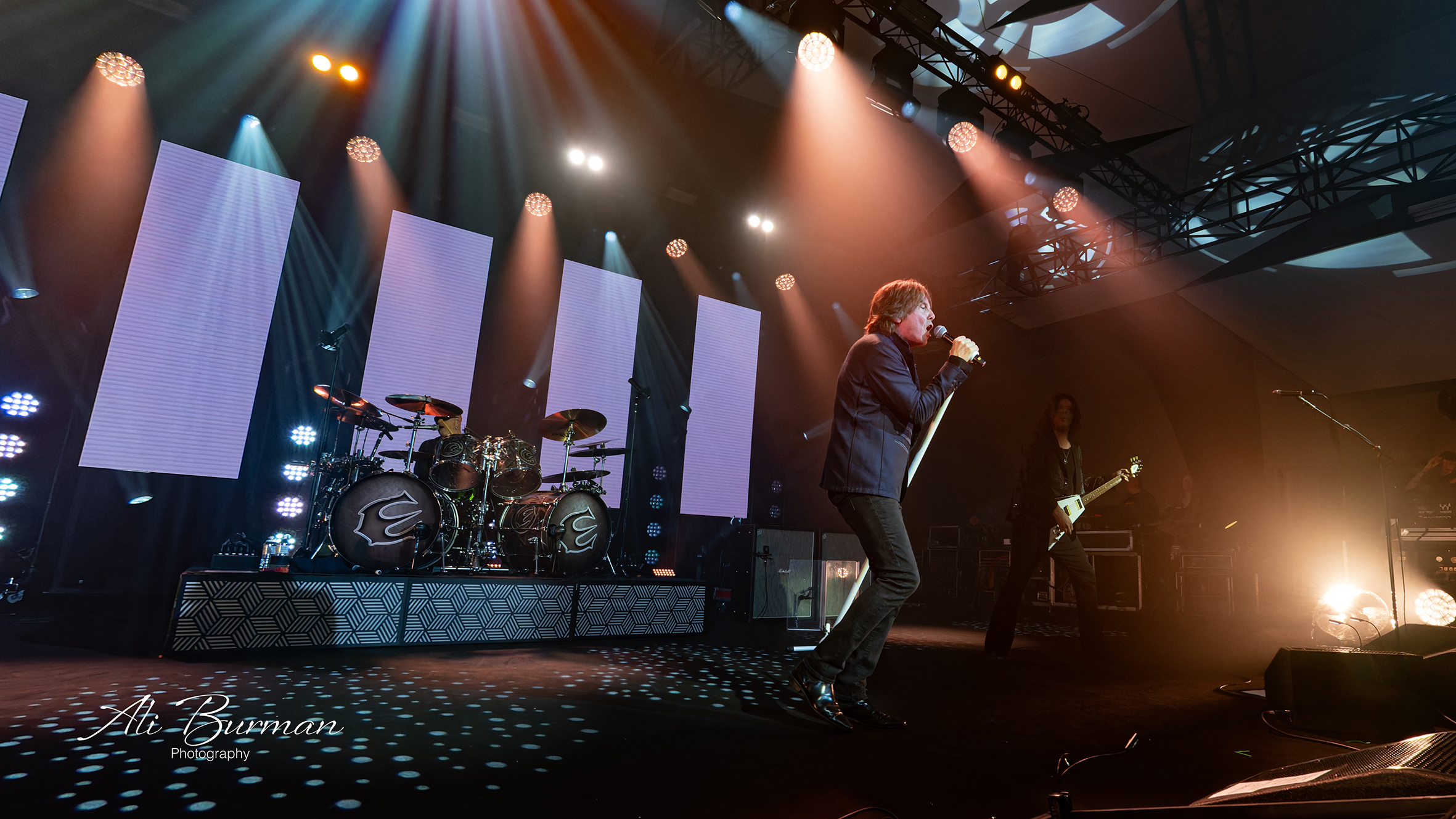
Three days, thirteen bands and a Mediterranean setting — so why the hell isn’t everyone in Britain talking about it?
Eden Arena, St Julian’s, Malta — 13–15 November 2026
Review By Ali Burman
There are certain things that immediately seem wrong about watching heavy metal in Malta.
For a start, it is November and the sun is still shining. Secondly, the venue is inside a rather smart hotel complex overlooking St George’s Bay rather than buried beneath a motorway flyover somewhere in the Midlands. And thirdly, after three nights of Kreator, Paradise Lost, Candlemass, Doro, Dirkschneider, Europe and assorted purveyors of amplified unpleasantness, you can walk outside and find yourself surrounded by bars, restaurants and the Mediterranean rather than a field containing approximately 14,000 discarded plastic pint glasses.
It shouldn’t work but it absolutely does.
The second Malta Metal Weekend arrived at the Eden Arena in St Julian’s with a deceptively simple proposition: thirteen bands, three nights and three distinct flavours of heavy music. Friday was the heavy stuff — Kreator, Paradise Lost, Omnium Gatherum and Malta’s own Angelcrypt. Saturday was devoted to the old-school faithful, with Doro, Dirkschneider, Candlemass, Anvil and Anchorite. Sunday went for the big choruses, melodic metal and hard rock, culminating in Europe celebrating 40 years of The Final Countdown.
On paper, it sounds like a fairly random collection of bands.
In practice, it made rather more sense than it had any right to.
The genius of Malta Metal Weekend is that it doesn’t really behave like a conventional festival. There is no vast field, no desperate sprint between stages and no need to decide whether you are going to miss Band A because Band B is playing 600 yards away at exactly the same time. Everything happens in one room. The audience arrives, settles in and lets the evening unfold.
And, crucially, the organisers have resisted the temptation to make the whole thing about one particular generation of metal fan.
Friday belonged to the serious riff merchants.
Saturday was a love letter to the men and women who helped invent the bloody thing.
Sunday was for everybody who secretly enjoys a gigantic chorus.
And there is absolutely nothing wrong with that.
FRIDAY: DEATH, DOOM AND DEUTSCHER THRASH
Opening a festival is never easy, particularly when you are not the headline act and half the audience is still deciding whether to buy another beer.
For Angelcrypt, however, there was an added responsibility. This was the Maltese band on the bill, playing in front of an international audience who had presumably flown thousands of miles for the likes of Kreator and Paradise Lost.
They needn’t have worried.
Angelcrypt delivered a suitably uncompromising set, their melodic death metal giving the evening an appropriately dark opening. There was no sense of a local band being wheeled out as a box-ticking exercise. They looked and sounded like they belonged there.
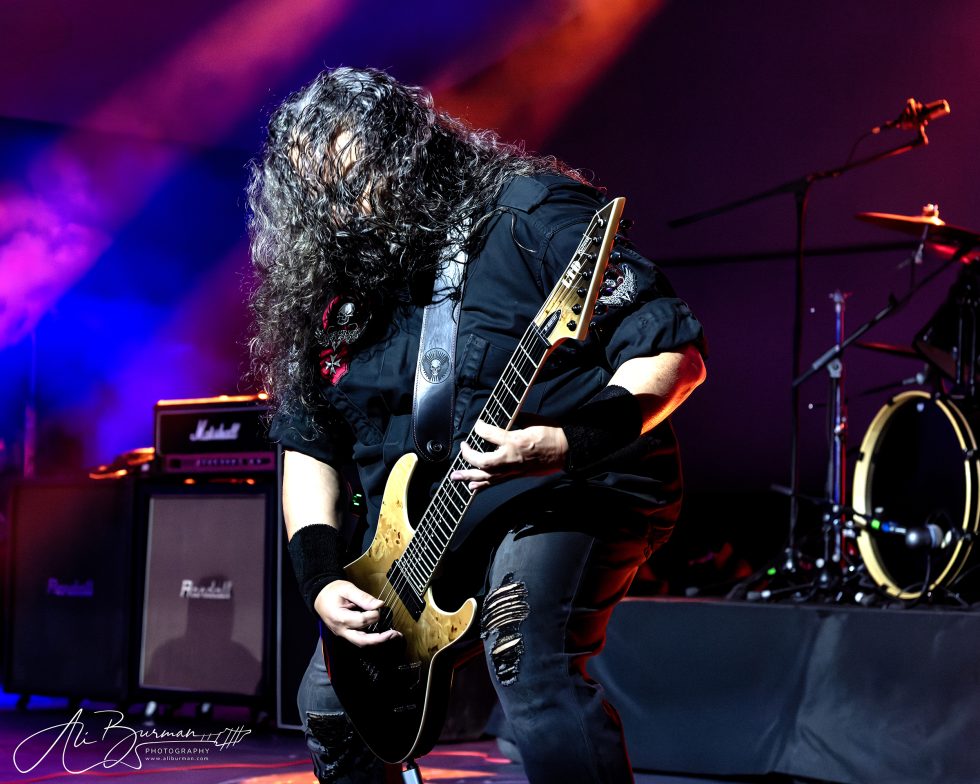
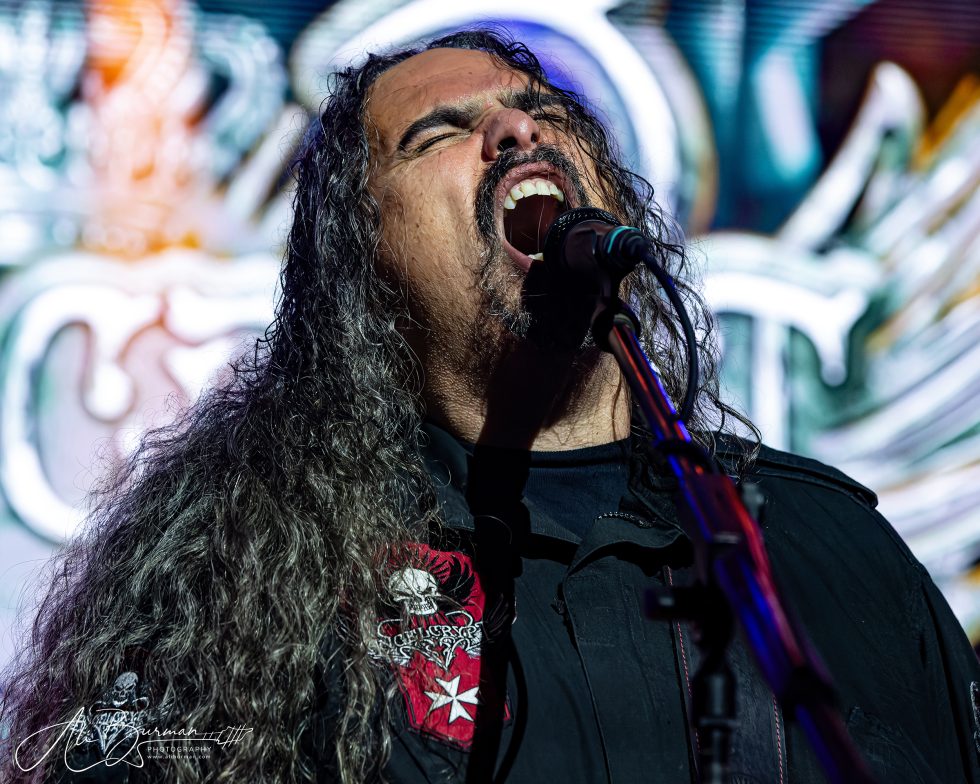
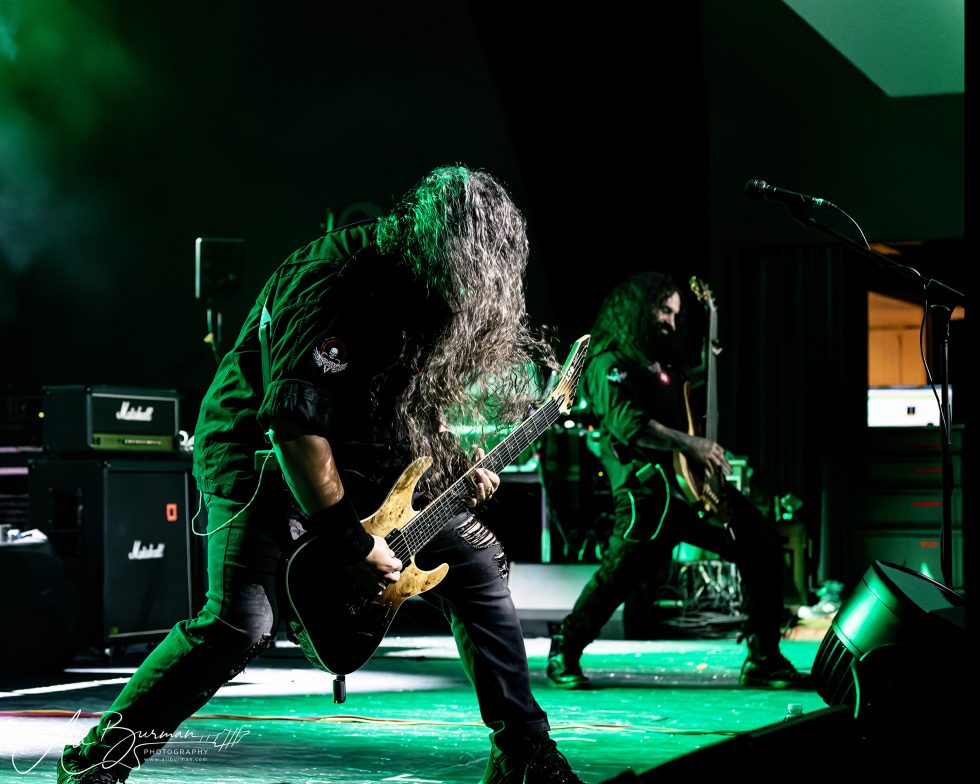
And that is important for Malta Metal Weekend.
If the festival is going to develop into a genuine destination event rather than simply becoming another overseas jaunt for British and European metalheads, the Maltese scene has to be part of the story. Angelcrypt made a convincing argument for exactly that.
Omnium Gatherum followed with a set that demonstrated why Finnish metal continues to be such a reliable source of magnificently miserable melody.
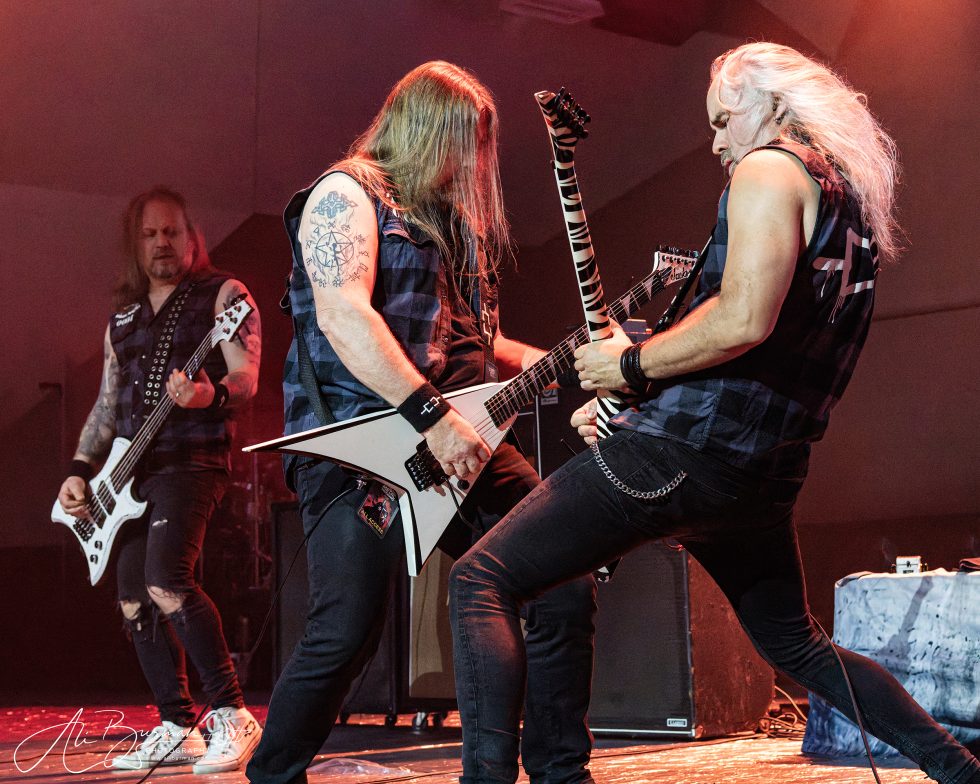
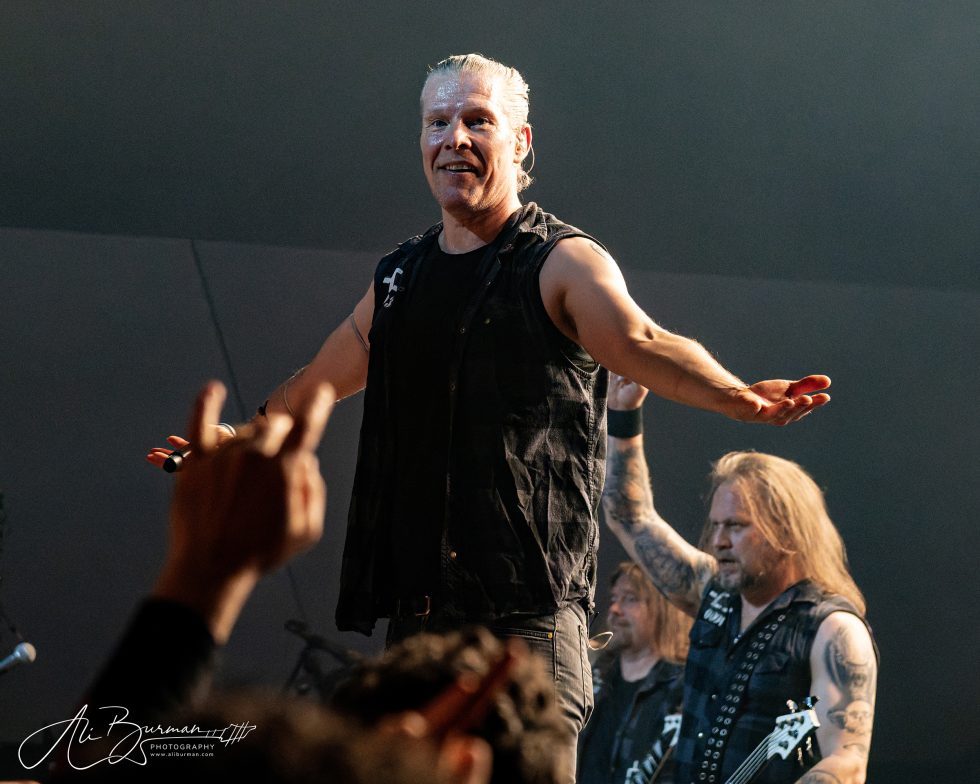
There is a particular quality to Finnish metal: everything sounds simultaneously enormous and desperately sad. Even when the riffs are flying and the drums are pounding, there is usually a wintry melancholy lurking underneath.
Omnium Gatherum brought plenty of that to the Eden Arena.
Their melodic death metal offered considerably more texture than a simple exercise in brutality, and the combination of melody, aggression and atmosphere gave the evening its first real sense of scale.
Then came Paradise Lost.
Now, Paradise Lost have been around long enough that it is possible to forget just how important they were. Before gothic metal became a genre that could be found occupying entire shelves in record shops, there was Gothic. Before every band discovered the commercial possibilities of putting a melancholy keyboard over a distorted guitar, Paradise Lost were dragging doom and death metal into much darker territory.
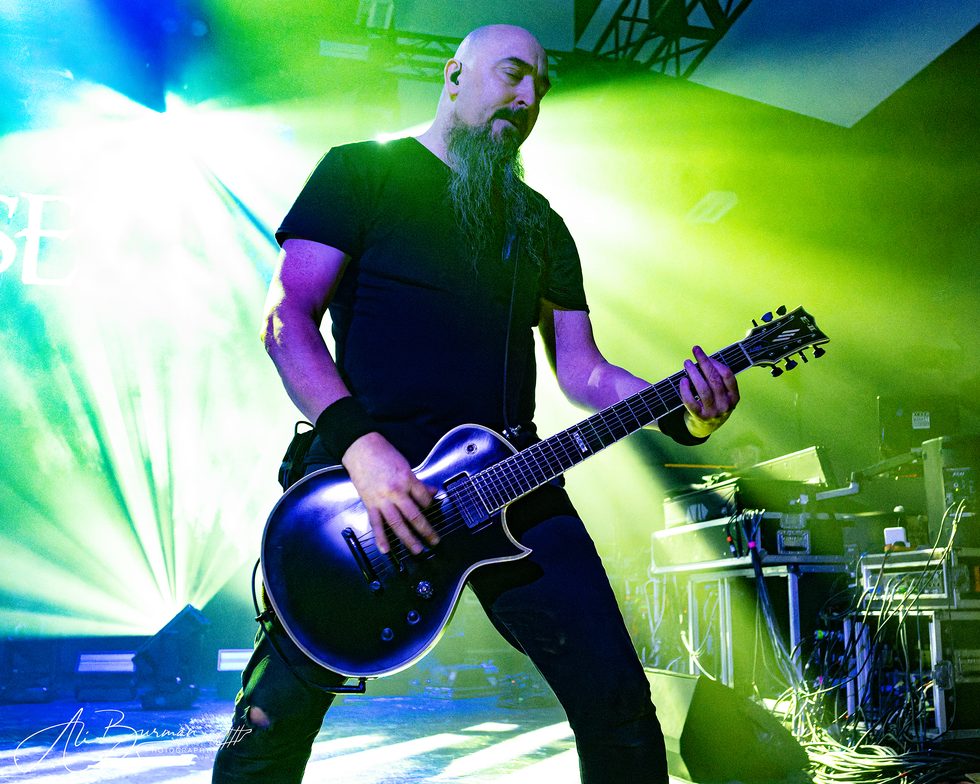
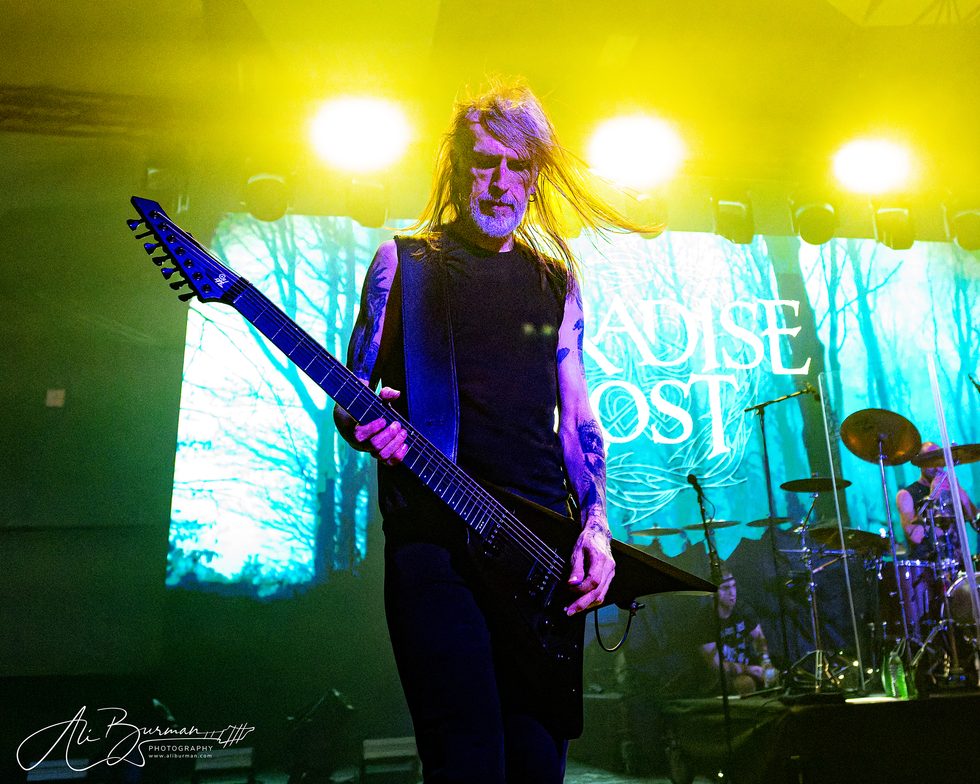
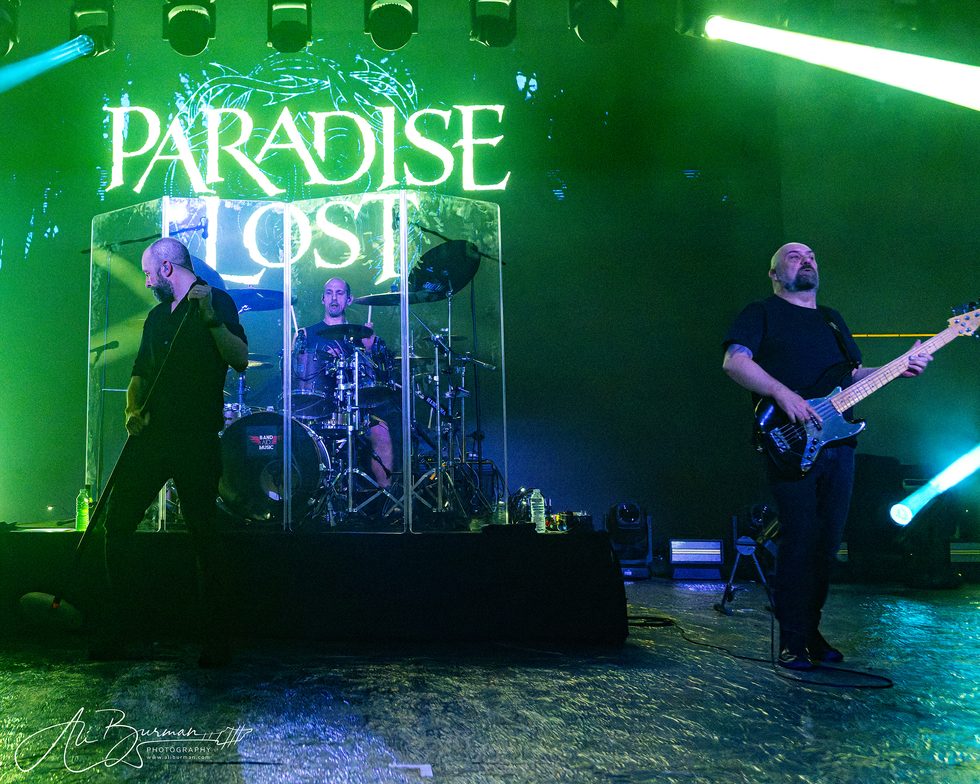
Watching them in 2026, however, is not a history lesson.
The band remain gloriously heavy.
Nick Holmes still possesses one of the most recognisable voices in British metal, while Greg Mackintosh remains capable of producing riffs that sound as though they were discovered carved into the walls of a particularly miserable Yorkshire crypt.
The set moved through different eras of the band’s career without feeling like a greatest-hits karaoke exercise. The older material had the necessary weight, while the later songs demonstrated that Paradise Lost have no intention of becoming a tribute act to themselves.
And then Kreator arrived to remind everyone that subtlety is occasionally overrated.
The Germans were always going to be a difficult act to follow. They are one of those bands whose reputation precedes them by several miles, and after more than four decades they have somehow retained the ability to sound genuinely dangerous.
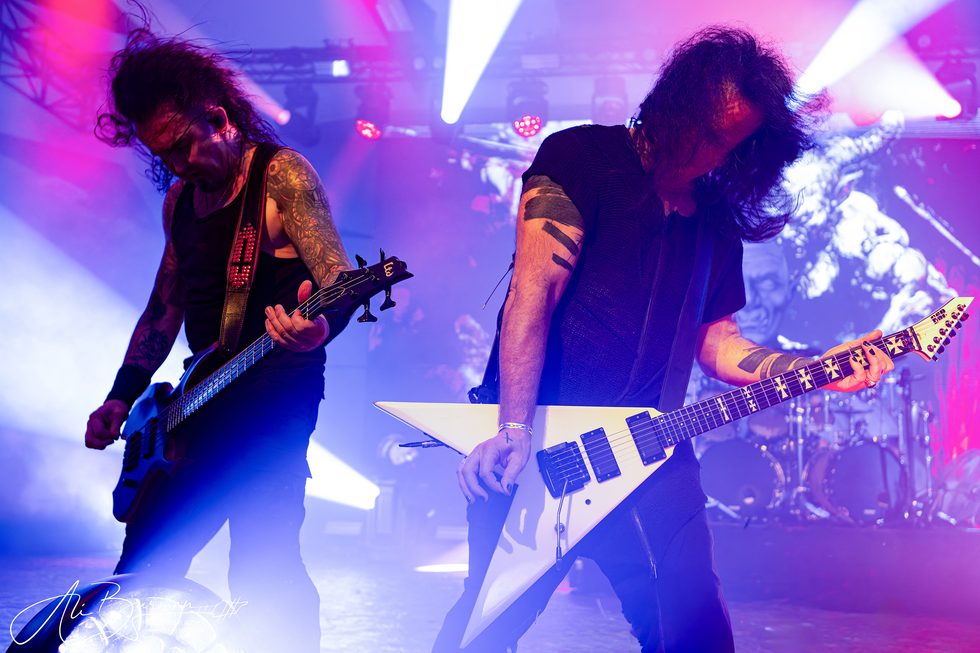
Mille Petrozza is a magnificent frontman because he doesn’t behave like a man who has been doing this for 40-odd years. There is still an almost gleeful nastiness to the way he prowls the stage, encourages the crowd and unleashes another slab of Teutonic violence.
The set had enough old material to keep the traditionalists happy and enough newer material to prove that Kreator are not simply touring on memories.
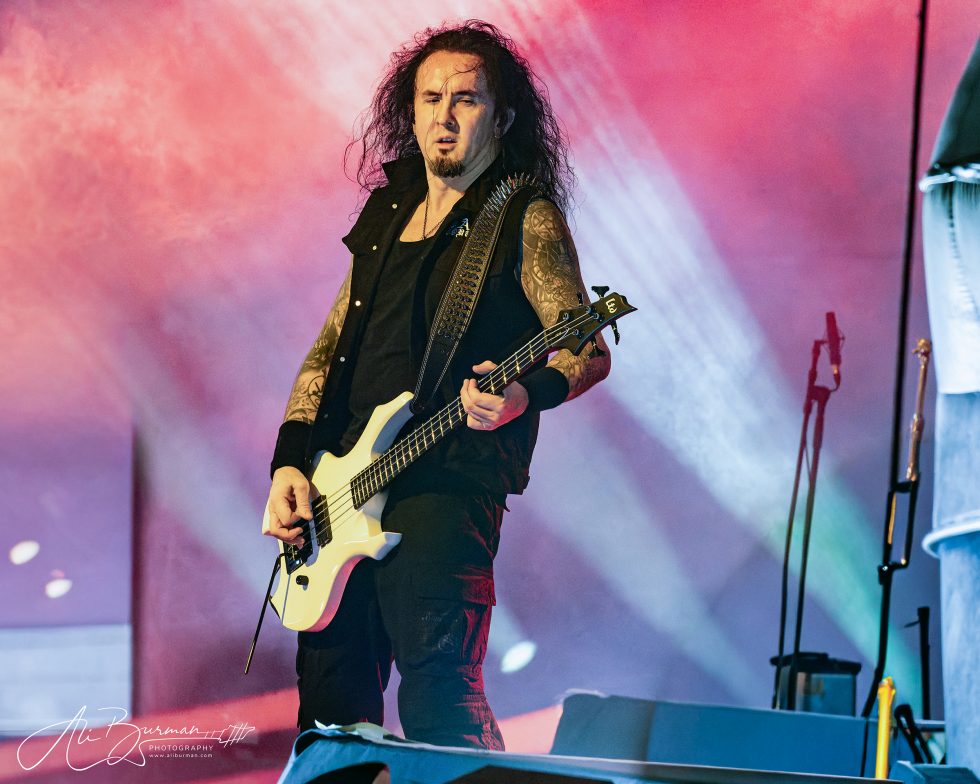
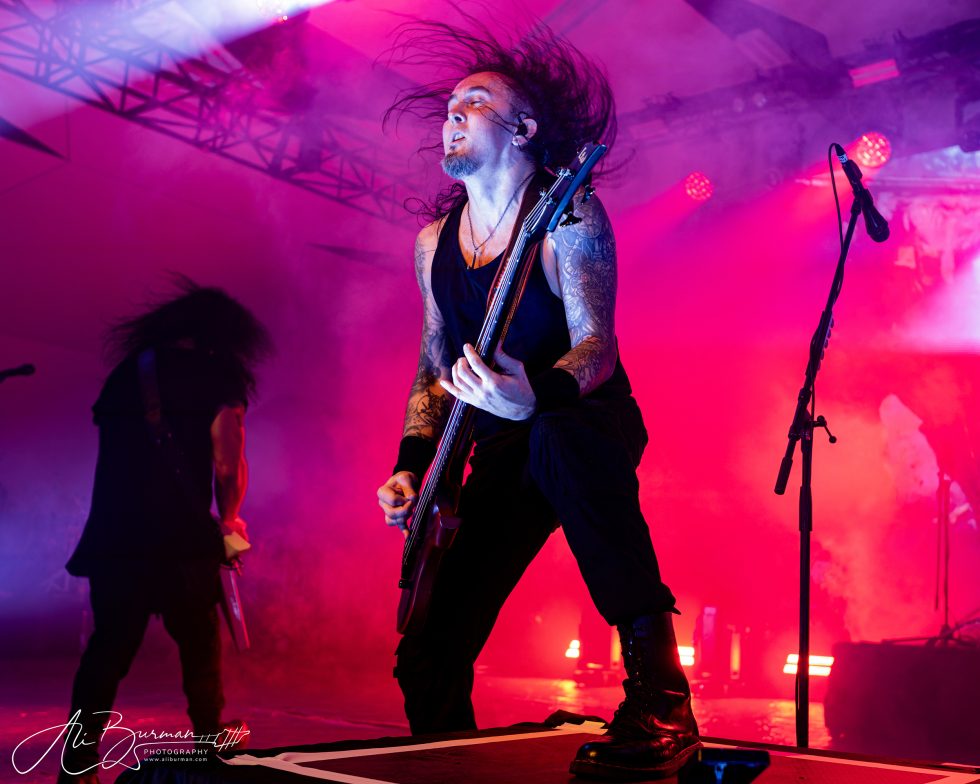
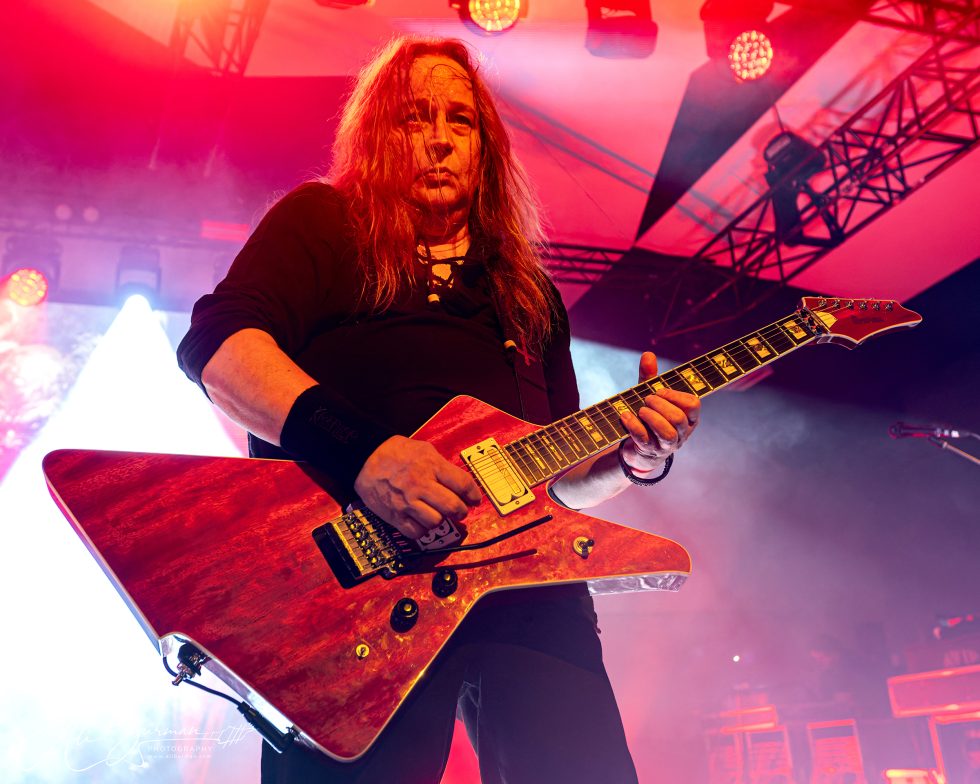
“Enemy of God”, “Extreme Aggression” and “Pleasure to Kill” were particularly brutal, but the newer material held its own.
The sound was heavy without turning into the sort of indistinguishable wall of distortion that can occasionally plague festival metal. The guitars had definition. The drums had impact. And when Kreator hit full speed, the Eden Arena became a very uncomfortable place for anyone hoping to have a quiet conversation.
Friday had done its job.
It had established the festival’s credentials.
Saturday would be a different proposition entirely.
SATURDAY: THE OLD SCHOOL STILL HAS TEETH
If Friday was for those who like their metal dark, fast and occasionally terrifying, Saturday was for those who believe that the correct number of guitarists is two, the correct number of leather jackets is several and that every problem in life can probably be solved with a Marshall stack.
Anchorite opened the evening, and their doom-heavy approach provided an appropriate bridge between the Maltese underground and the international veterans that followed.
Then came Anvil.
There is a strange and wonderful irony to Anvil’s continued existence.
At various points in their career, the Canadian band have seemed to be either on the brink of superstardom or on the brink of being forgotten. The documentary Anvil! The Story of Anvil turned them into unlikely cult heroes, but the music was always the important bit.
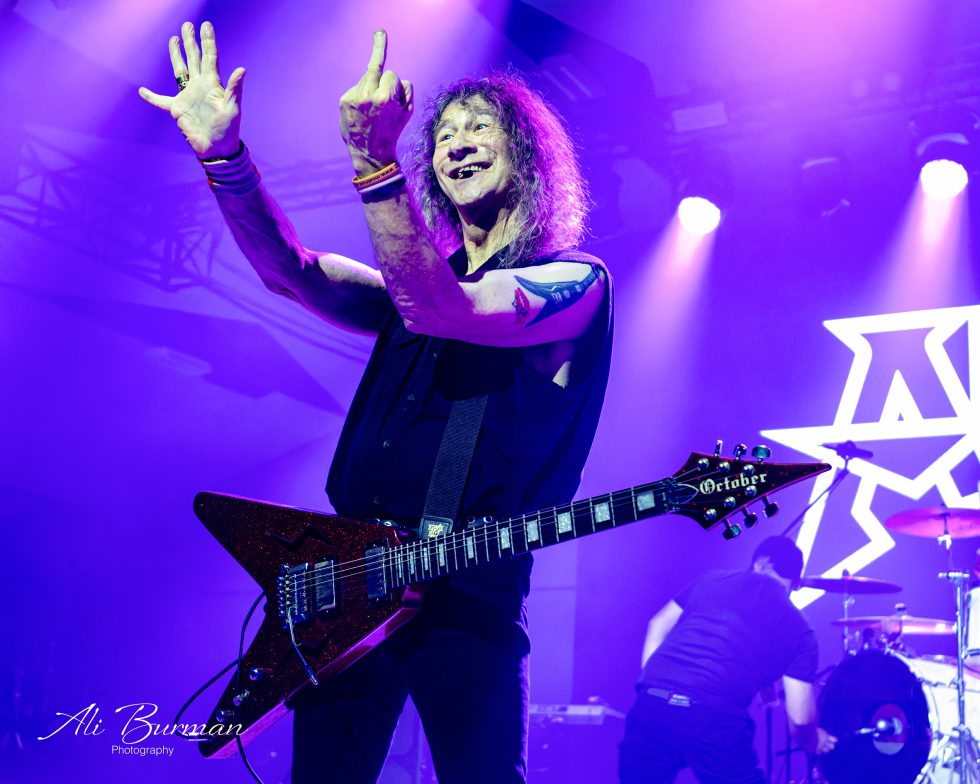
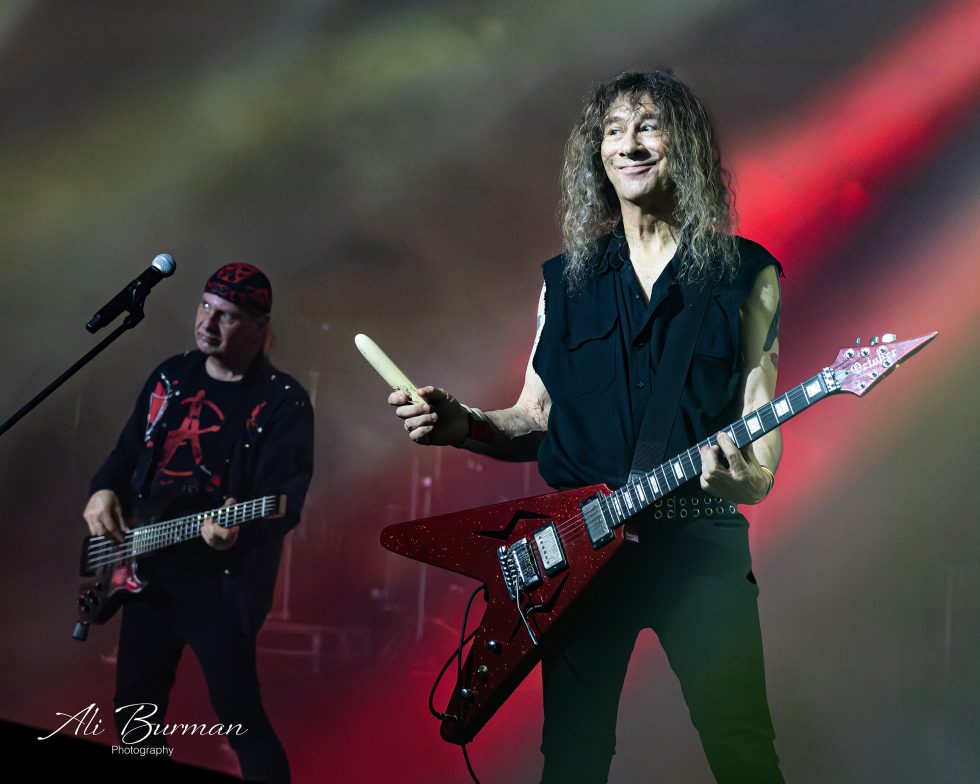
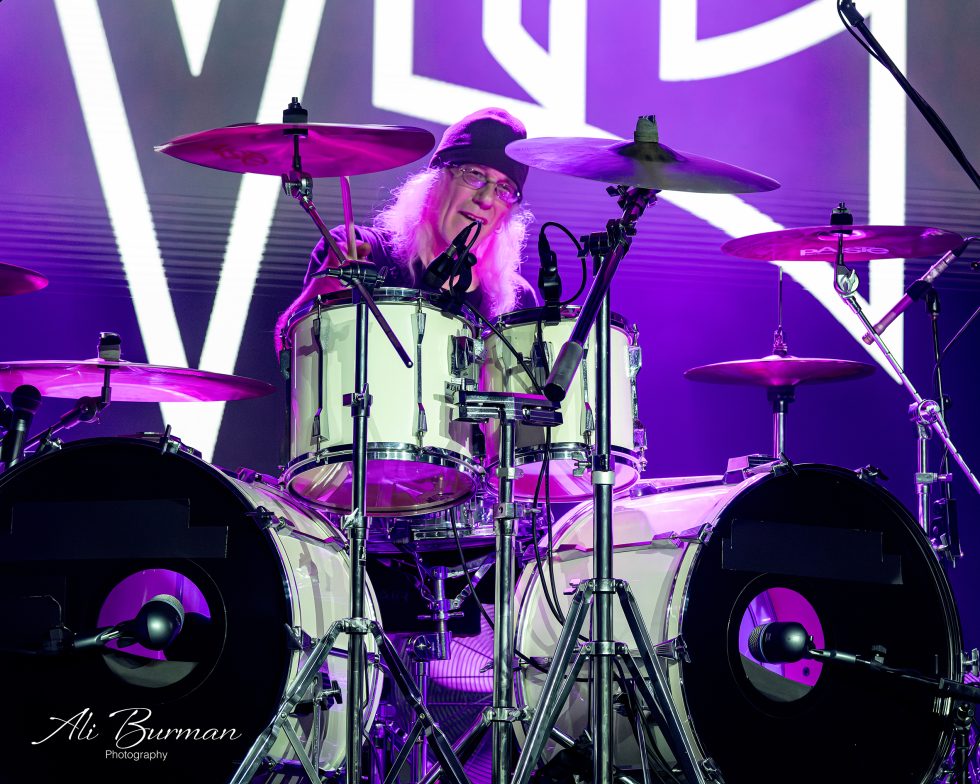
And live, it still works.
Steve “Lips” Kudlow remains an endearing combination of mad professor, rock star and bloke who has absolutely no intention of retiring. The songs are straightforward, riff-driven heavy metal, but there is an honesty to Anvil that is increasingly rare.
No reinvention.
No fashionable production tricks.
Just riffs.
And metal.
Lots of metal.
Candlemass then changed the temperature completely.
If Anvil were a punch in the face, Candlemass were being buried alive.
The Swedish doom legends have always understood that heaviness isn’t necessarily about speed. Sometimes the heaviest thing you can do is play one enormous chord and allow it to hang in the air long enough for everybody to contemplate their own mortality.
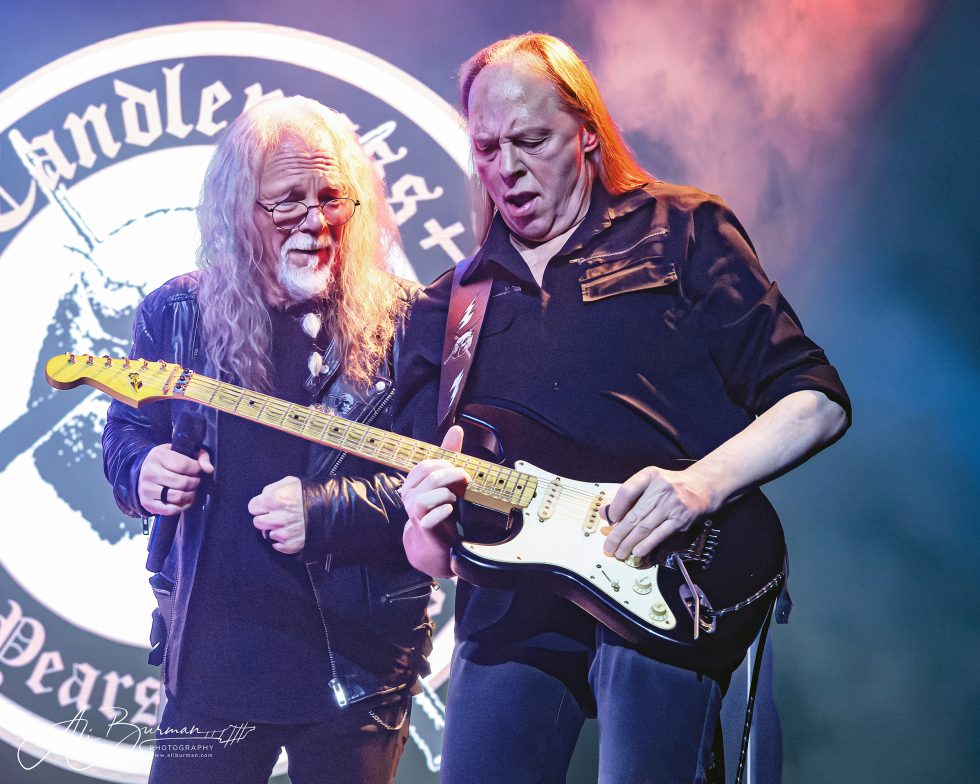
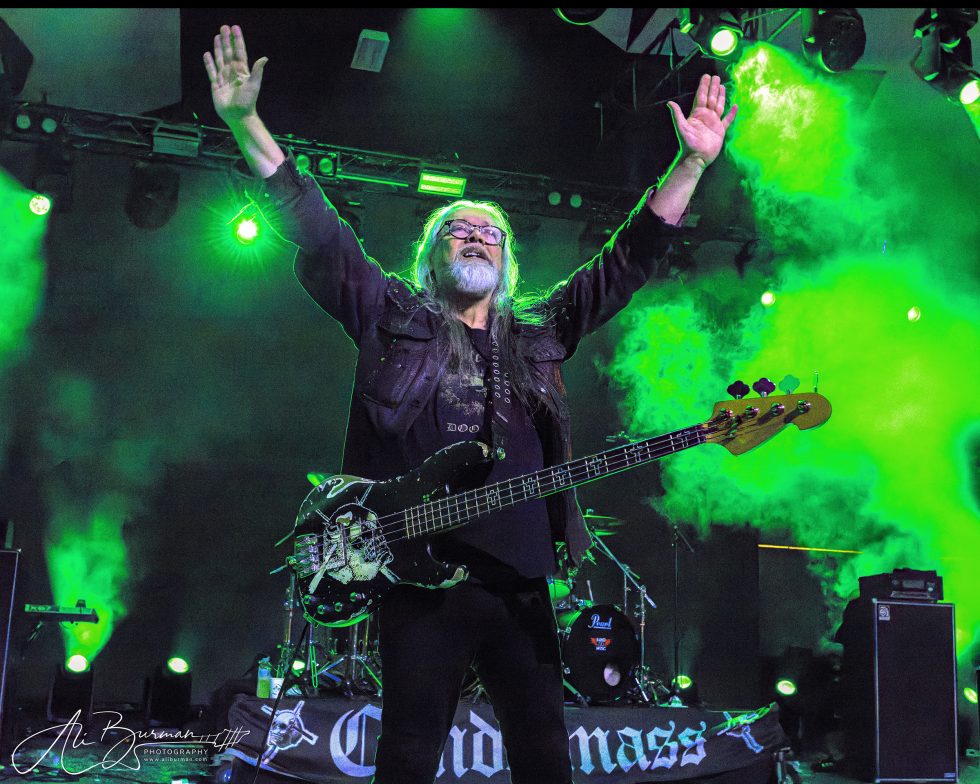
Their set was a masterclass in that particular art.
“Bewitched”, “Under the Oak”, “Crystal Ball” and “Solitude” remain towering examples of doom metal, and live they retain an almost ceremonial quality.
There is no need for Candlemass to jump around like teenagers.
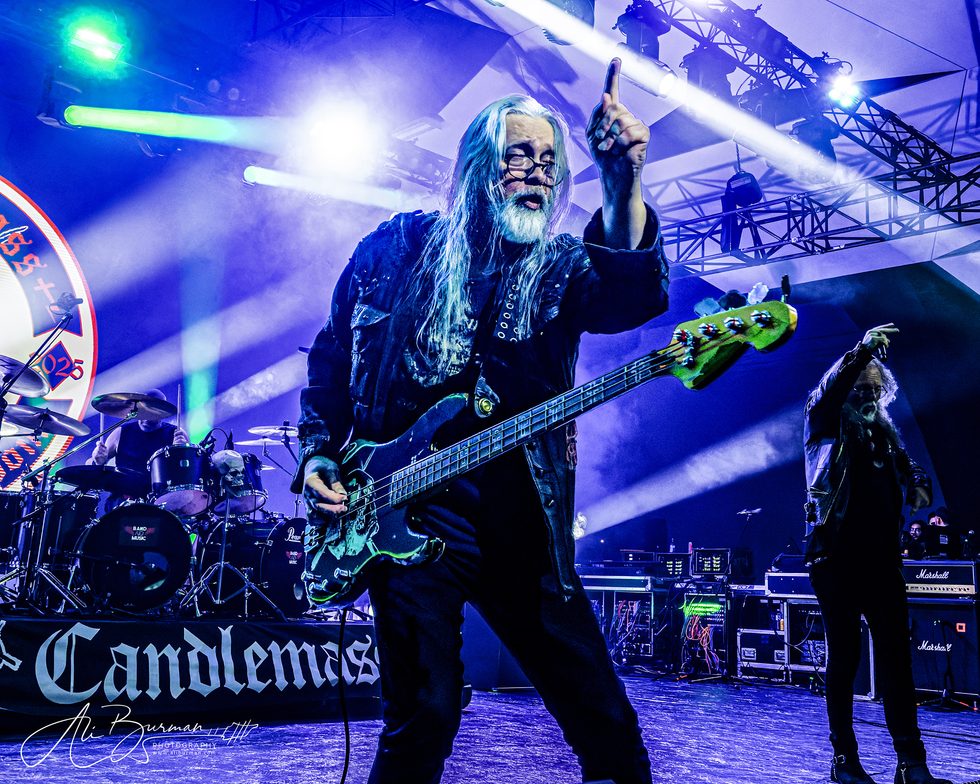
They simply stand there and make the world sound miserable.
Beautifully miserable, admittedly.
Then Udo Dirkschneider arrived to remind everybody that misery is not compulsory.
The former Accept frontman was playing the band’s Balls to the Wall material, and this was exactly the sort of performance that classic-metal fans had come to Malta to see.
Udo’s voice remains one of heavy metal’s great natural phenomena. It is not pretty. It was never supposed to be. It is a rasp, a growl and a warning siren all rolled into one. And hearing Accept classics such as “Breaker”, “Metal Heart”, “Balls to the Wall” and “Burning” in a room packed with people who clearly knew every word was one of the weekend’s great communal moments.
There was something wonderfully old-fashioned about it.
No irony.
No guilty pleasures.
Just thousands of people celebrating songs that have survived for decades because they are bloody good songs.
Then came Doro.
If there was one performer on the Saturday bill who could legitimately be described as royalty, it was the Metal Queen herself.
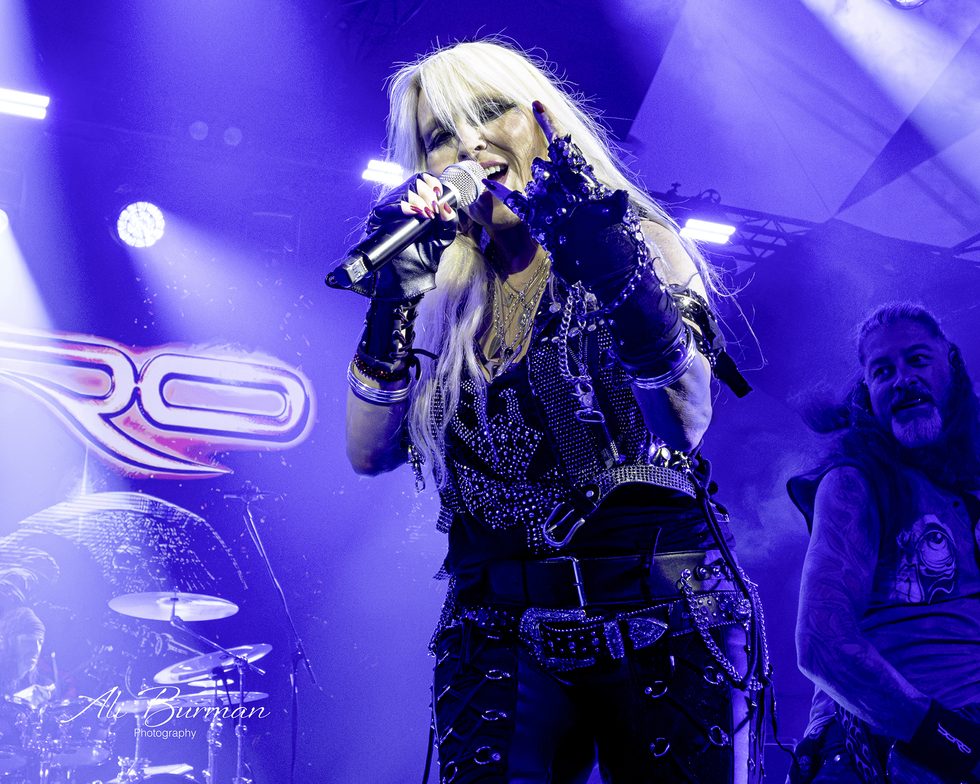
Doro Pesch has been doing this for an absurdly long time and still performs with the enthusiasm of somebody who has just discovered heavy metal for the first time.
That is probably her greatest strength. There is no cynicism. No sense of going through the motions. Doro genuinely appears delighted to be on stage.
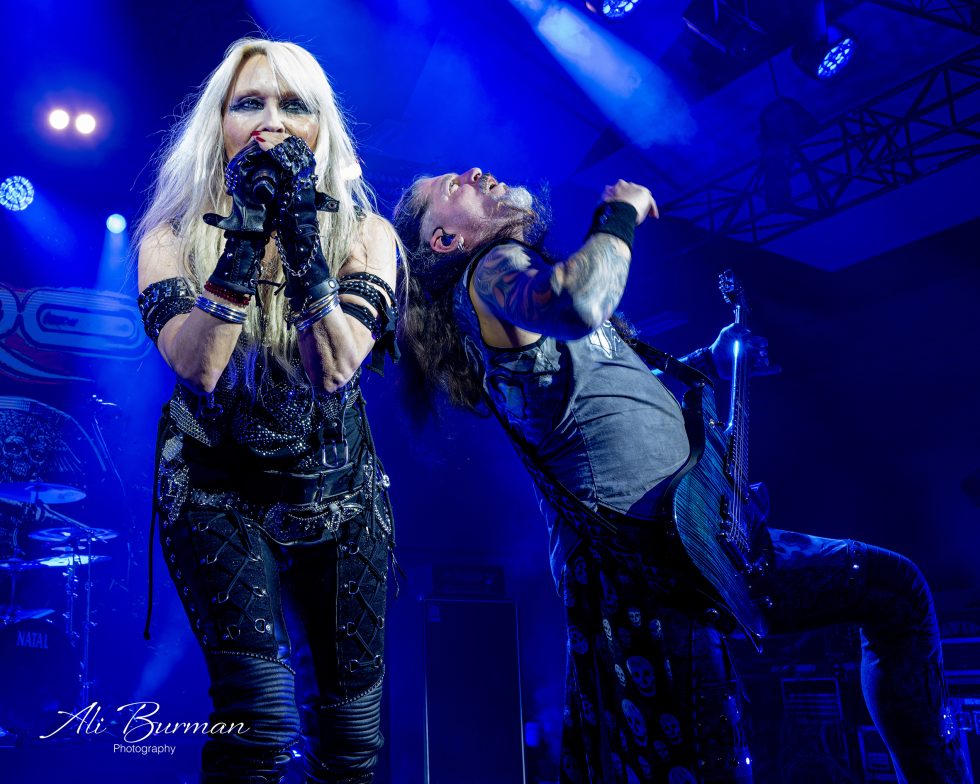
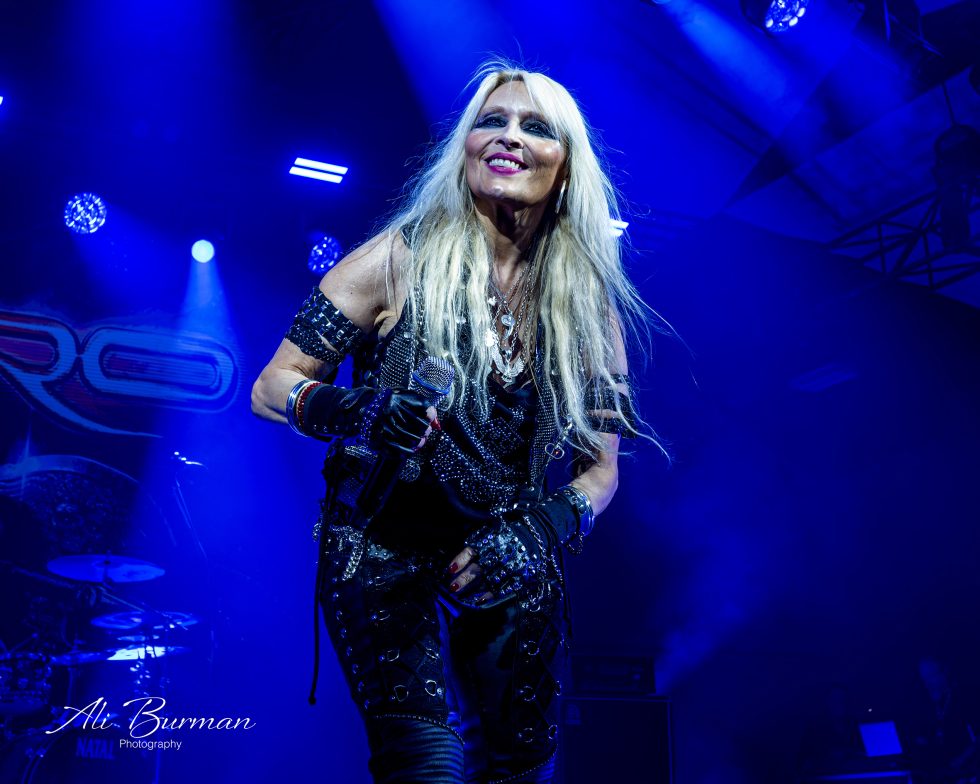
“Burning the Witches”, “I Rule the Ruins”, “Raise Your Fist in the Air” and “All We Are” produced precisely the sort of response you would expect. The crowd sang, punched the air and generally behaved as though the last 40 years had never happened.
Her performance of “Breaking the Law” was a nice reminder that Doro understands exactly what her audience wants, while ending with the Maltese flag was the sort of gesture that could have seemed cheesy in the wrong hands.
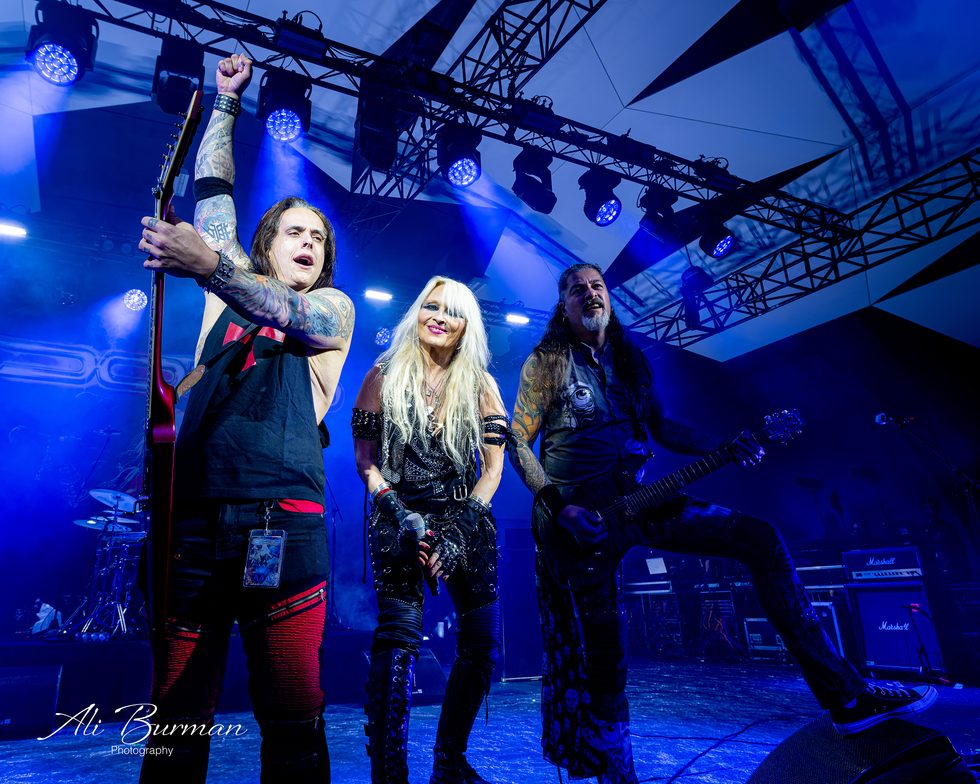
It didn’t. It felt sincere. And that was Saturday’s greatest achievement. It didn’t feel like a nostalgia night. It felt like a celebration of music that is still alive.
SUNDAY: BRING ON THE BIG CHORUSES
Sunday afternoon began with a rather different sort of metal spectacle.
Over at the InterContinental Hotel, Nicko McBrain took to the stage for his spoken-word show — although calling it a “show” perhaps undersells the sheer amount of talking involved from a man who has spent most of his professional life communicating through a wall of drums. There was no Iron Maiden set, no drum solo and, thankfully for anyone who had been drinking since breakfast, no requirement to keep up with the tempo. Instead, McBrain spent the afternoon telling stories from an extraordinary career, mixing rock ‘n’ roll anecdotes with the sort of humour and larger-than-life personality that have made him one of metal’s most likeable characters.
And it worked brilliantly. There is something wonderfully entertaining about hearing a man who has shared stages with some of the biggest names in heavy metal simply sit down and tell a story. McBrain has the rare ability to make decades of rock-star excess sound like a mate recounting what happened on a particularly chaotic night out. The audience was completely with him, laughing, listening and clearly enjoying the chance to see a different side of one of metal’s most recognisable figures. It was also a nice change of pace before the guitars started flying again. After two days of riffs, double-kick drums and people shouting into microphones, sometimes what a metal festival really needs is a bloke from Iron Maiden sitting in a hotel and talking bollocks for a couple of hours.
By Sunday evening, the weekend had developed its own rhythm.
People were tired. People were hoarse. People had probably spent considerably more money on beer than they had originally intended. And yet the atmosphere was lighter. Sunday was the melodic night. Atomic Flame opened proceedings, followed by Gus G. and Ronnie Romero, a combination that immediately raised the guitar-hero quotient.
Gus G. has the chops, obviously. He is one of those players who makes difficult guitar work look annoyingly easy.
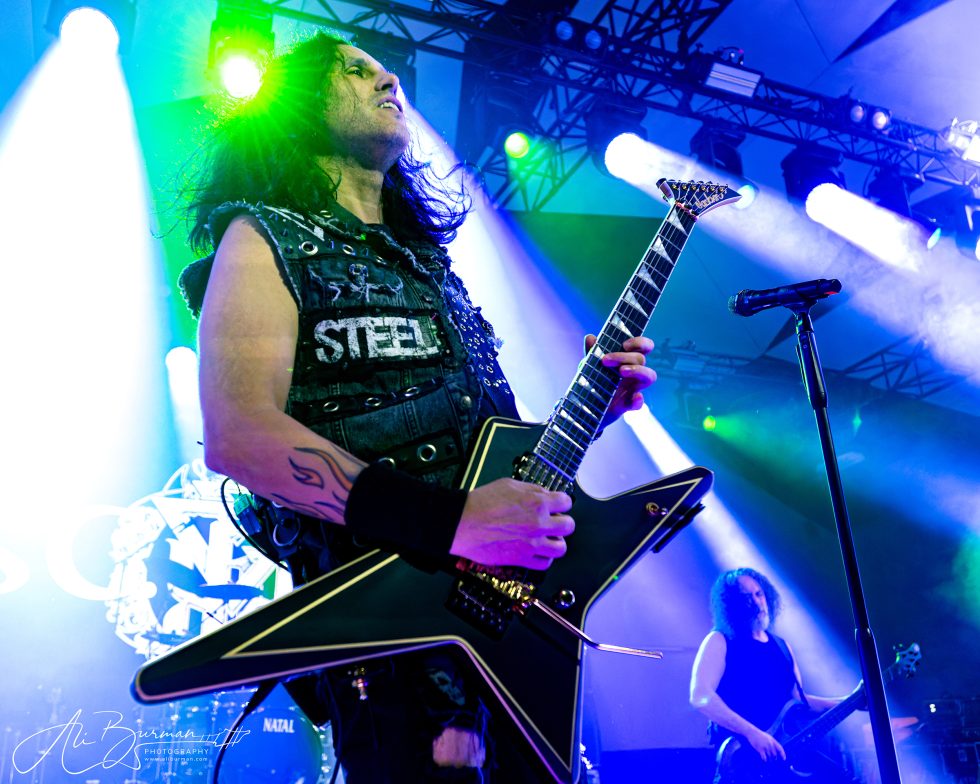
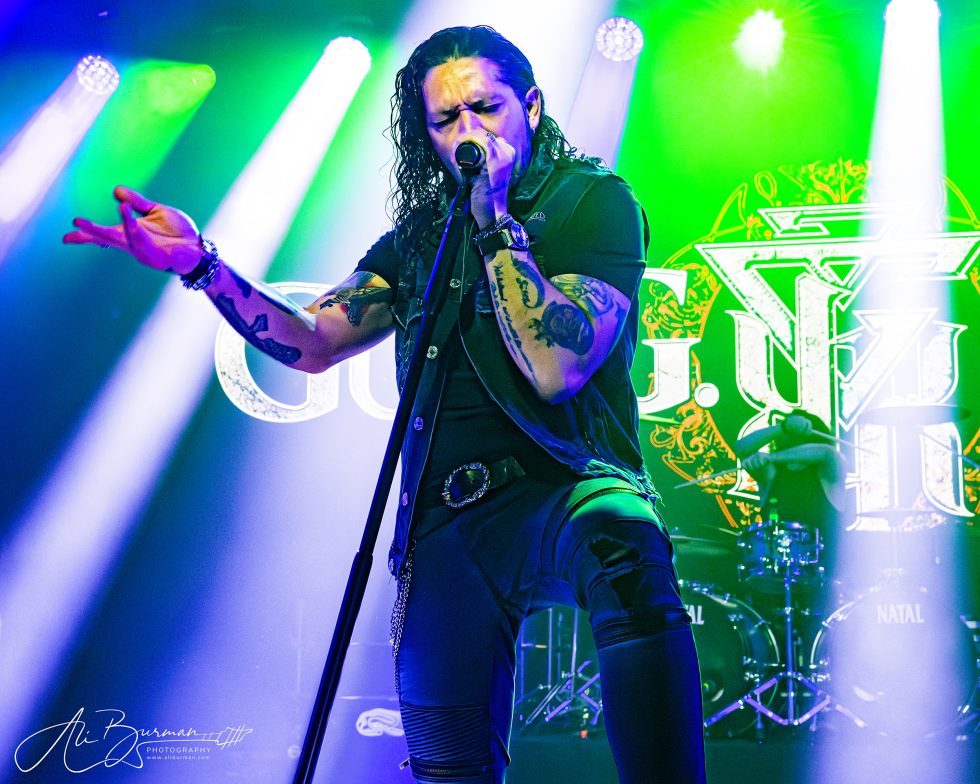
Ronnie Romero, meanwhile, possesses the sort of voice that makes classic hard rock sound completely natural.
The pair worked particularly well together.
The set moved between Gus G.’s solo material and songs associated with some of the great names of classic metal, including Ozzy Osbourne and Rainbow. It was not simply an exercise in showing off.
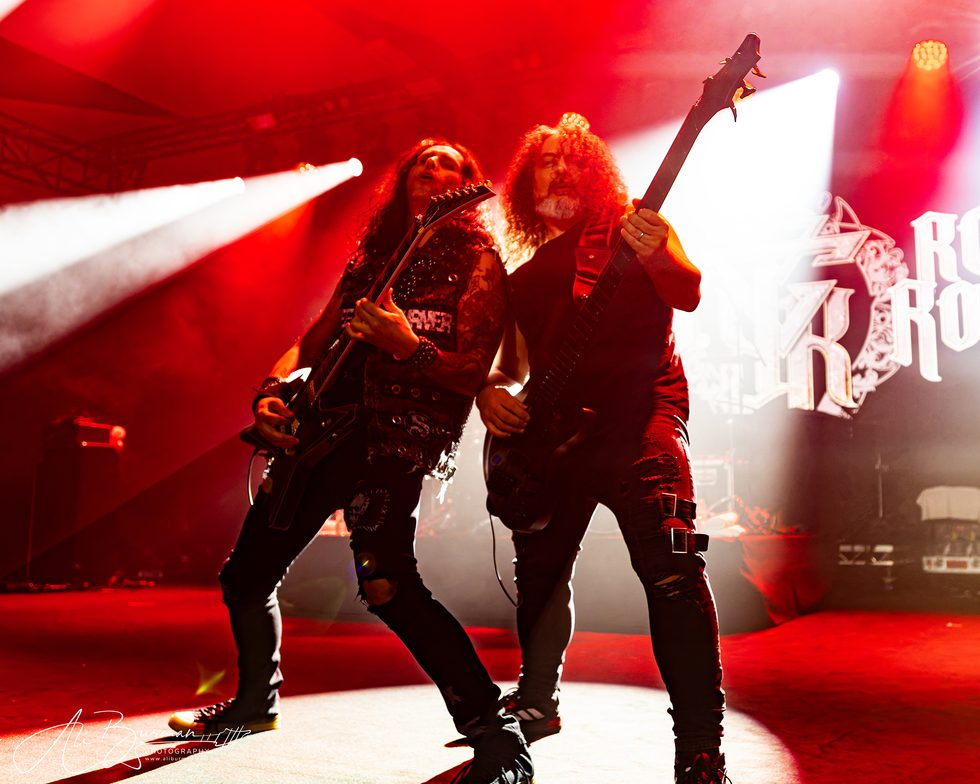
There was plenty of musical muscle, but also enough melody to make the performance accessible beyond the guitar nerds standing at the front.
Then Adrian Vandenberg took us back to the golden age of enormous hair, enormous choruses and guitars that apparently required their own insurance policies.
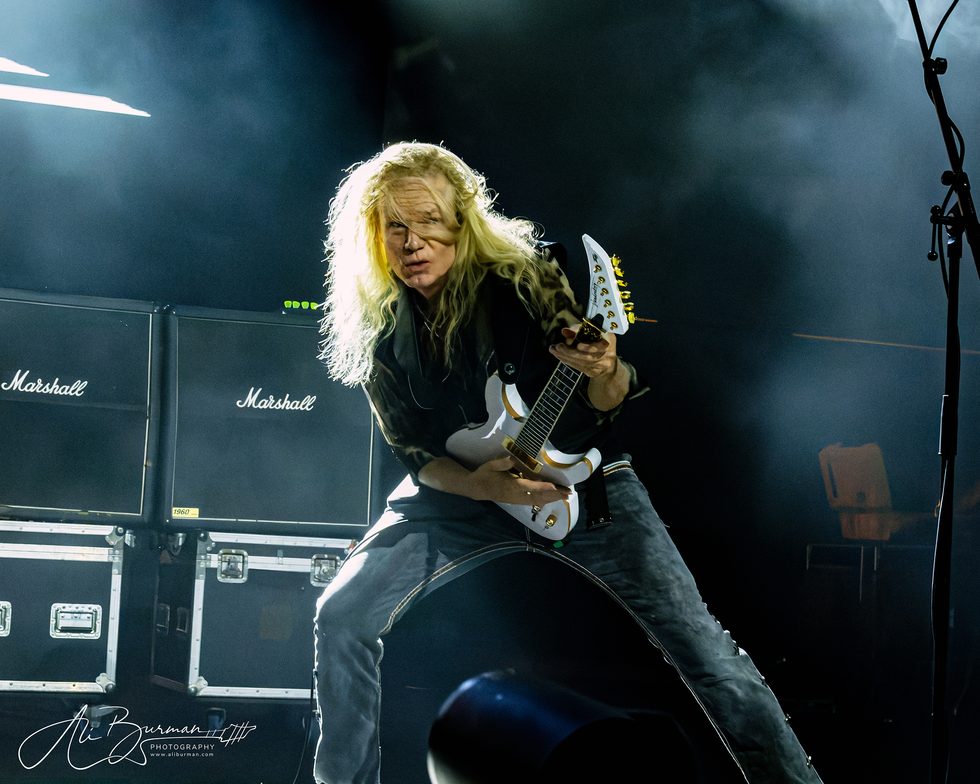
His “My Whitesnake Years” set was shamelessly nostalgic.
And why shouldn’t it be?
“Bad Boys”, “Give Me All Your Love”, “Crying in the Rain”, “Here I Go Again” and “Still of the Night” are not songs that require rediscovery. They are part of the hard-rock furniture.
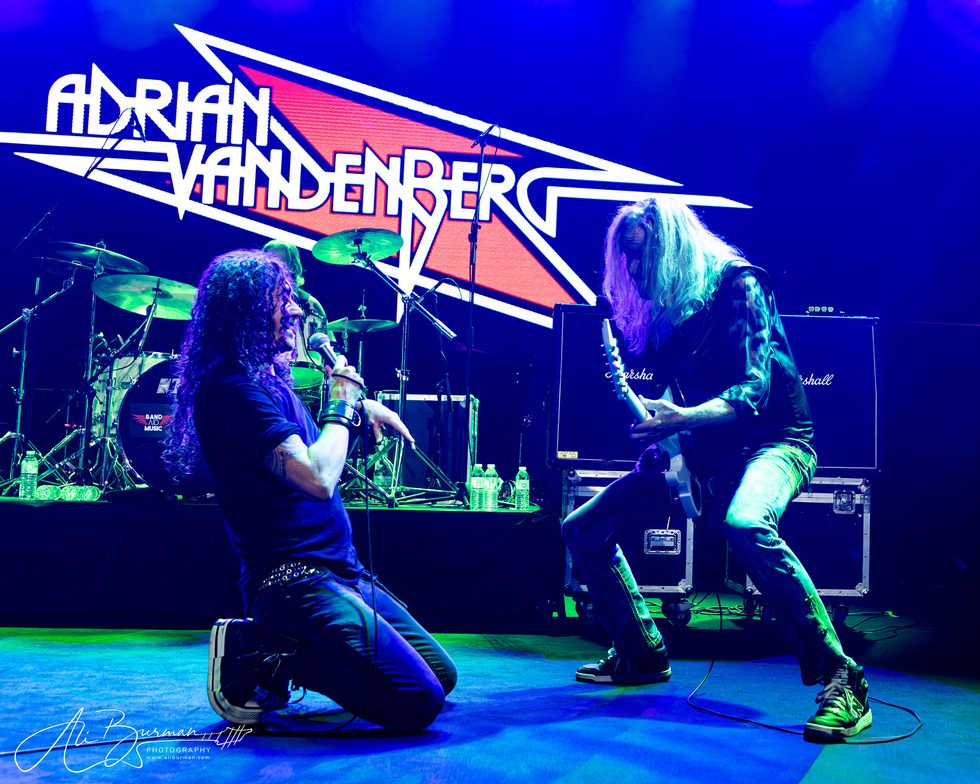
Mats Levén handled the vocal duties with plenty of confidence, while Vandenberg himself provided the expected guitar heroics.
But there was something rather lovely about seeing a room full of metal fans happily embracing the more commercial end of hard rock.
Because this is the great secret of heavy metal. Most of us like a chorus. Some of us just pretend we don’t.
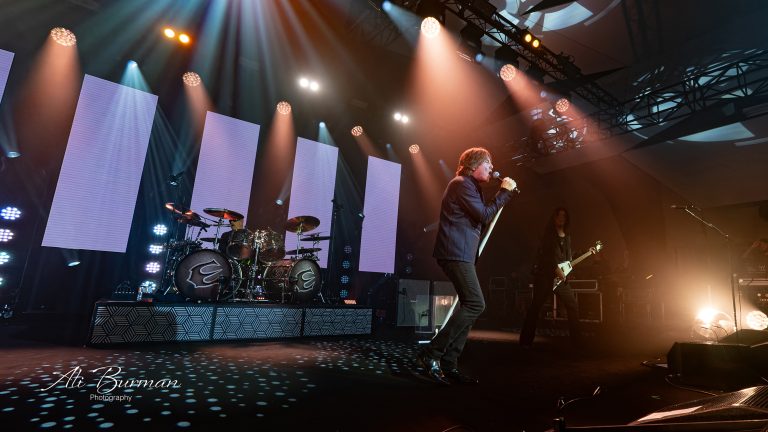
And then Europe arrived.
Now, there are bands who spend their entire career trying to escape one enormous hit.
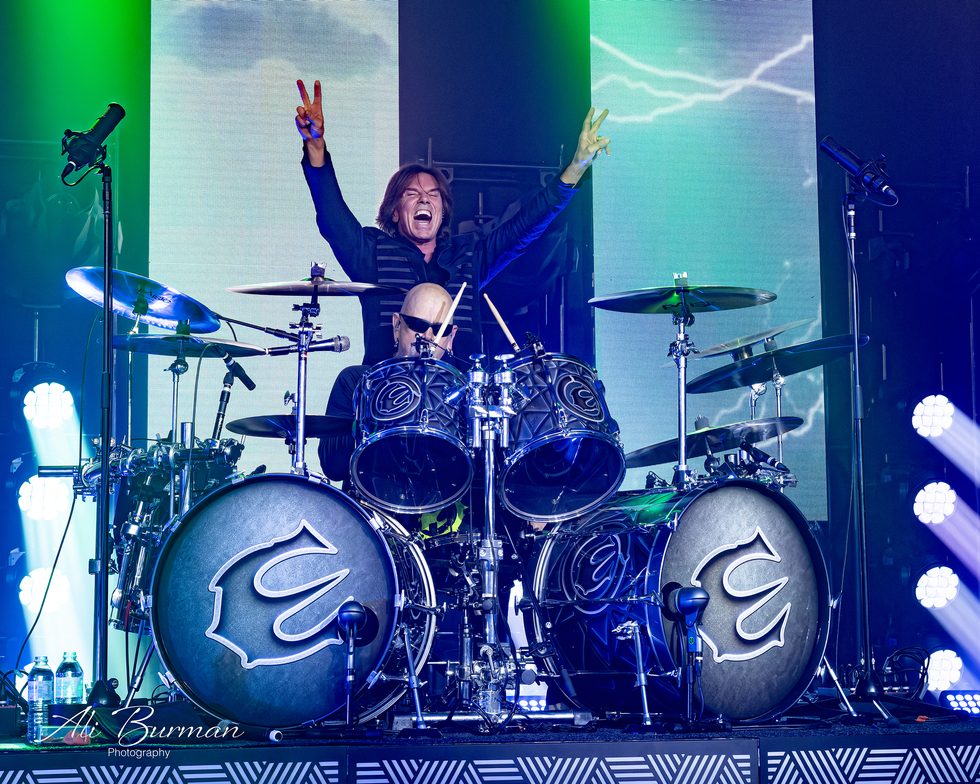
Europe have, depending on your perspective, either embraced theirs or learned to live with it.
The Final Countdown 40th Anniversary Tour gave them an excuse to celebrate the album that turned them into international stars, but the performance made it clear that Europe are considerably more than one synthesiser riff.
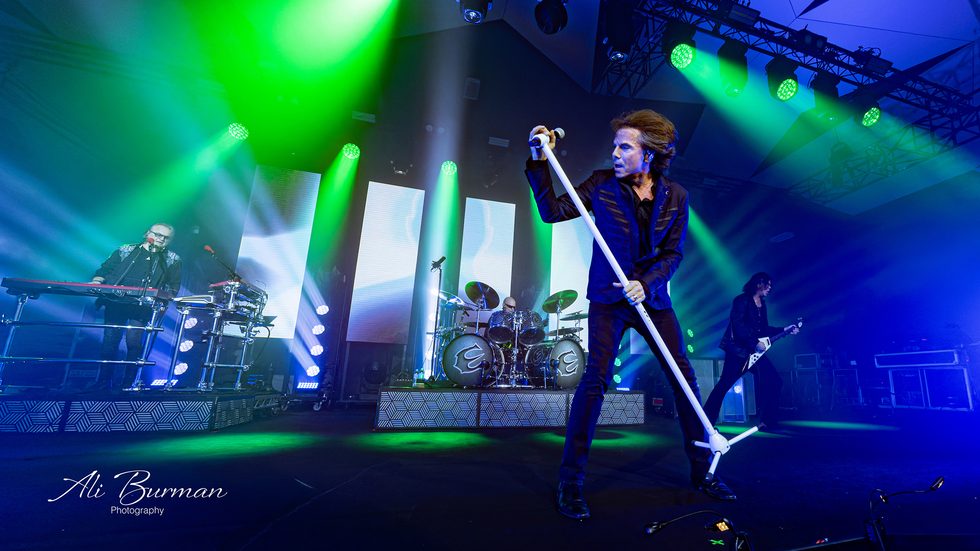
Joey Tempest remains a charismatic frontman, John Norum remains a formidable guitarist and the band have enough material from their later career to demonstrate that they are not simply recreating 1986.
“Rock the Night”, “Superstitious” and “Carrie” all landed beautifully.
But let’s be honest.
Everybody was waiting for it.
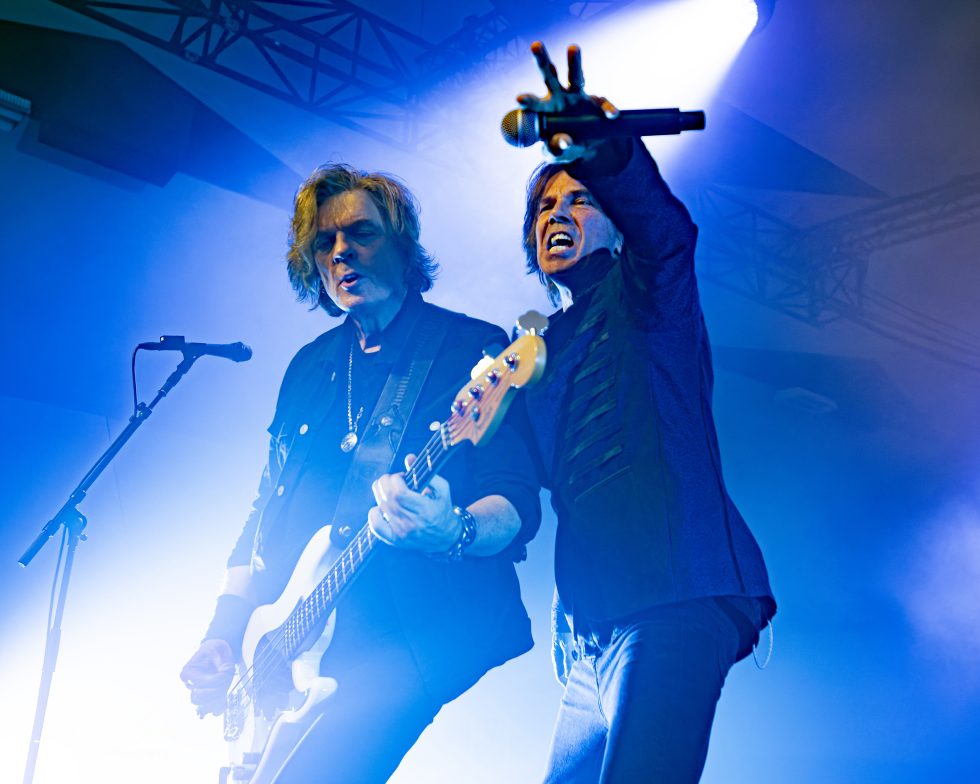
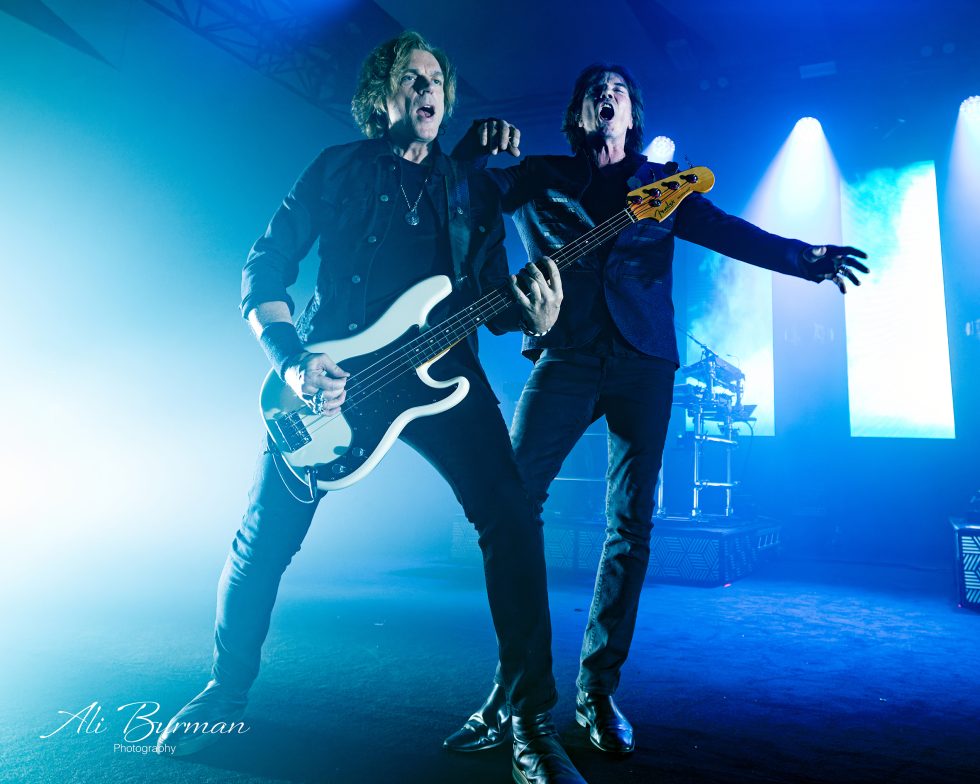
The opening notes of “The Final Countdown” are so deeply embedded in popular culture that you could probably play them to someone who had spent the last 40 years living in a cave and they’d recognise them.
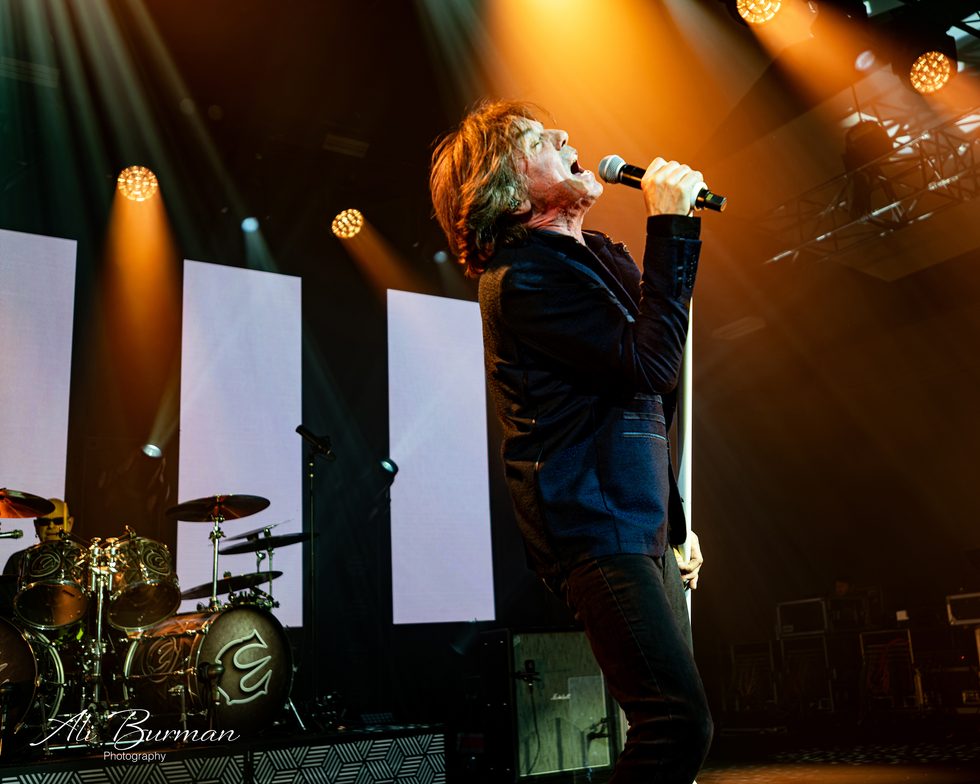
And when that keyboard line finally appeared, the entire room erupted.
Metalheads who had spent Friday night moshing to Kreator were suddenly singing alongside people who probably couldn’t tell a thrash riff from a lawnmower.
And that was the moment Malta Metal Weekend made perfect sense.
THE VERDICT
The second Malta Metal Weekend was never going to compete with Download, Hellfest or Wacken on scale.
It doesn’t need to. What it has instead is personality. Thirteen bands across three nights is a manageable proposition. The Eden Arena is large enough to make the major acts feel substantial without swallowing the audience. And the location gives the entire weekend a slightly surreal quality.
You can watch Kreator reducing a room to rubble and, half an hour later, be outside looking at the Mediterranean. Try doing that at Donington in February. The biggest success of the weekend, though, was the programming.
Friday’s extreme metal, Saturday’s classic-metal celebration and Sunday’s melodic/hard-rock extravaganza created three distinct evenings without making the festival feel fragmented.
There were peaks, naturally. Kreator were ferocious.
Paradise Lost demonstrated once again why they remain one of Britain’s most important heavy bands.
Candlemass delivered doom in its purest form.
Dirkschneider and Doro provided masterclasses in classic-metal longevity.
And Europe closed the weekend exactly as they should: with a song everybody knew.
The local representation was equally important.
Angelcrypt and Atomic Flame showed that Malta is not simply a convenient geographical location for foreign promoters to import bands into. There is a genuine local metal community here, and giving those musicians a stage alongside established international acts is precisely how a festival develops an identity.
There are things to improve, of course.
The festival is still young, and the atmosphere will inevitably evolve as the audience grows. Some transitions between stylistically very different bands occasionally felt abrupt, and the Eden Arena can sometimes retain the slightly corporate feel of the hotel complex around it.
But those are minor complaints.
The more important point is that Malta Metal Weekend already feels like an event rather than merely a collection of gigs.
And perhaps that is because of the location.
There is something gloriously absurd about spending three consecutive nights listening to some of the heaviest music ever created while knowing that the Mediterranean is just outside.
Metal has always been about escapism.
Malta Metal Weekend simply offers a rather better destination.
Three days. Thirteen bands. One island.
The amps are switched off for another year.
The ringing in the ears will probably last considerably longer.
FINAL VERDICT: 9/10
Best of the weekend: Kreator
Biggest surprise: The sheer variety of the bill
Most dependable: Doro
Heaviest: Candlemass
Best singalong: Europe — obviously
Best reason to book a flight: The combination of festival and Mediterranean setting
Would we go again? Absolutely.
The dates and line up for Malta metal weekend 2027 will be announced in the New Year at Malta Metal Weekend | Metal Festival




+ There are no comments
Add yours