By Glen Parkes
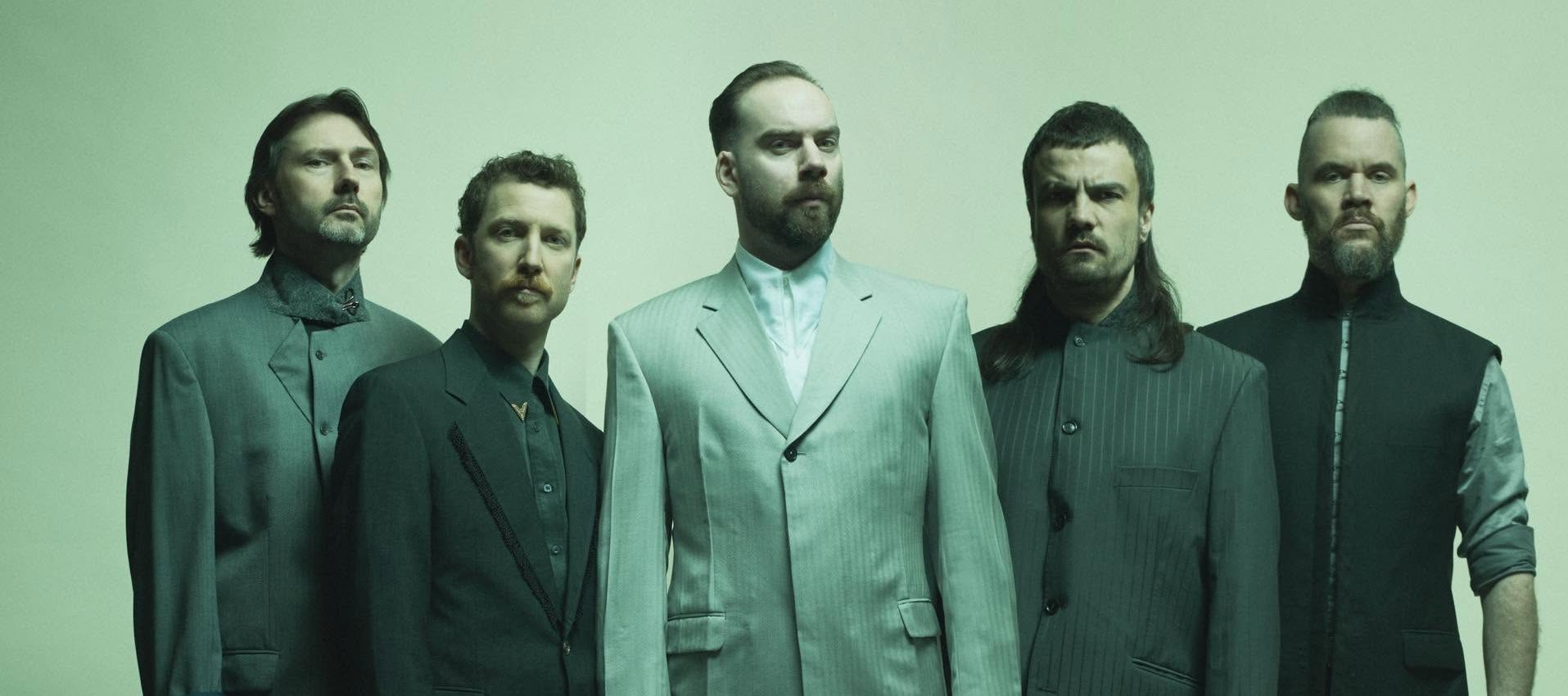
There are albums that arrive as collections of songs, and then there are albums that feel like someone has opened the door to a much darker room and invited you inside. DE STAAT, the seventh album from Dutch five-piece De Staat, belongs firmly in the second camp.
Released on 18 September 2026 through V2 Records, DE STAAT is the record where a band formed in Nijmegen in 2006 finally puts its own name on the front door. It is quite a statement after almost two decades of building a reputation for doing things differently. The title translates as “The State”, and here that idea becomes the centre of a ten-track examination of power, manipulation, belief, reality and the strange behaviour of people when they become part of something bigger than themselves.
What immediately grabs you is the sound. De Staat have always been difficult to put neatly into one box, but here industrial grooves, heavy riffs, electronic textures and alternative rock collide with an unsettling precision. There is plenty of movement, but nothing feels accidental. Torre Florim writes, produces and mixes the album himself, and the production gives the record a controlled, sometimes claustrophobic character.
THE KING is a perfect opening statement. It arrives with a hypnotic sense of repetition, turning “The King Is Dead, Long Live the King” into something that feels less like a lyric and more like a mechanism that refuses to stop. It is catchy, but there is something uncomfortable underneath that hook, and that tension becomes one of the album’s greatest strengths.
THE FIRE pushes the pressure higher, using a driving groove to frame a world where catastrophe can happen while people continue watching from a safe distance. The track is confrontational without needing to shout constantly. THE UNDERDOG and FREEDOM then widen the record’s argument, bringing different perspectives into the picture while keeping those muscular rhythms and electronic edges firmly in place.
The middle of the album is where DE STAAT becomes particularly interesting. THE NOISE feels like an appropriate title for a track dealing with overload, while GLORY takes a colder look at what happens when power becomes detached from the people it supposedly represents. THE BOY and THE MAN shift the perspective again, making the record feel less like a political lecture and more like a study of human behaviour.
That distinction matters. De Staat are not simply telling the listener what to think. Instead, they create a world where the questions are built into the music. The grooves pull you in, the hooks keep you there, and the darker ideas sit underneath until you realise just how much the record is asking you to consider.
THE MATTER continues that uneasy journey before FAITH brings the album to its five-minute conclusion. It is an appropriate ending because belief runs through the whole record, whether that belief is in a leader, a system, an idea or simply the need to believe that everything makes sense. The final track leaves more questions hanging than answers, which feels entirely intentional.
The album’s wider concept is just as ambitious. For the first time, Florim developed the record, live show and visual world together over a two-year period rather than treating them as separate stages of the process. That vision continues through De Staat Becomes De Staat, a live production built around a physical staircase and stages representing Introduction, Connection, Separation, Power and Absolute Power. The band’s long experience at festivals including Glastonbury, SXSW and Sziget, alongside tours with The Rolling Stones and Muse, gives that ambition plenty of live experience behind it.
The clever part is that the record remains physical as well as intellectual: bass and drums give the ideas weight, while electronics keep the ground moving beneath your feet throughout.
There is also something refreshing about a band this far into its career still sounding restless. De Staat could have played it safe. Instead, DE STAAT sounds like a group deliberately challenging its own identity while finally embracing the name that has followed it since the beginning.
At 37 minutes and 21 seconds, the album never outstays its welcome. Ten tracks are enough to build the argument without drowning it in unnecessary decoration. The result is dark, rhythmic, experimental and strangely accessible.
DE STAAT is not background music. It demands attention, but rewards it with layers that reveal themselves with every listen. This is De Staat taking their industrial rock, experimental instincts and fearless visual imagination and pulling them into one coherent statement.
For a band approaching its twentieth anniversary, that is quite a way to introduce yourself.











+ There are no comments
Add yours