
Review By Ian Walker
Few bands can claim the rollercoaster career of Belfast’s Sweet Savage. They were there at the birth of the New Wave of British Heavy Metal, crafting raw, hungry songs in the late ’70s that carried the same fire as their peers Iron Maiden, Saxon, and Def Leppard. They split before fame could catch them, only to have their single Killing Time immortalized by Metallica, giving their name new life in the process. Decades later, they’ve weathered breakups, reunions, and shifting lineups. Now, in 2025, they’re back with Bang—an album that proves Sweet Savage aren’t here to coast on nostalgia but to demand their place in the modern metal landscape.
A Legacy That Refuses to Fade
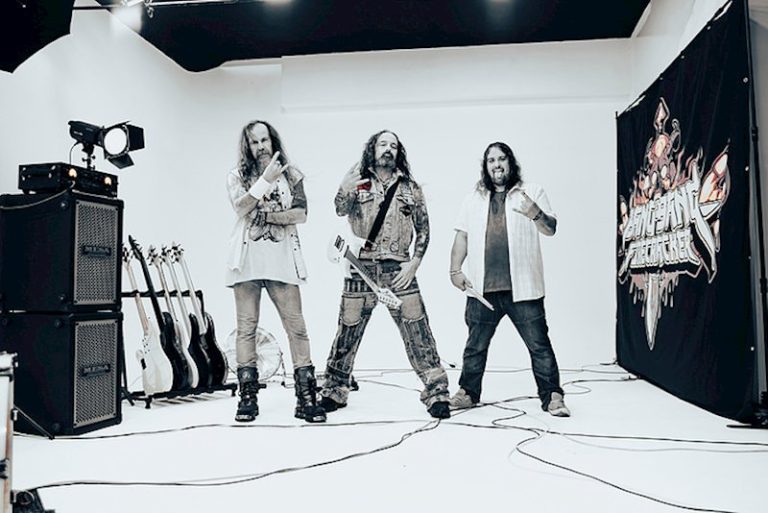
To appreciate Bang, you have to understand the weight of history on Sweet Savage’s shoulders. Vivian Campbell may have gone on to global superstardom, Simon McBride now slings riffs with Deep Purple, but it’s frontman Ray Haller who’s remained the band’s anchor. Alongside drummer Marty McCloskey and guitarist Phil Edgar, Haller leads a revitalized Sweet Savage into their boldest chapter in years. With Bang, they don’t just revisit their roots—they sharpen them for a world where metal has splintered into countless forms but still craves authenticity.
The Title Track: A Shot Across the Bow
The album kicks off with the title track Bang, and it wastes no time announcing itself. Clocking in just over three minutes, it’s all serrated riffs, pounding drums, and Haller’s seasoned snarl. The chorus hits like a war cry, reminding listeners that Sweet Savage still understand the primal thrill of NWOBHM’s immediacy. It’s a statement of intent—loud, unflinching, and deeply satisfying.
The follow-up, Bad F Robot, blends classic heavy metal grit with industrial tinges. There’s a mechanical chug to the riff that feels almost dystopian, adding modern textures without sacrificing the band’s DNA. It’s tongue-in-cheek yet menacing, showing the group’s knack for balancing attitude with weight.
Tracks like Leave Me Alone and I See The Light stretch out into more expansive territory. Leave Me Alone feels personal, defiant, and cathartic—Haller spitting venom at whatever ghosts still linger. I See The Light, by contrast, has an almost spiritual intensity. It’s still heavy, but there’s an undercurrent of searching, a reminder that NWOBHM was never just about speed but also drama and scale.
Then comes I Don’t Know, a punchy rocker that thrives on uncertainty. Its brisk pacing and jagged riffs recall the band’s earliest days, yet there’s a maturity in the delivery—older, wiser, but no less feral.
If Bang has a centerpiece, it’s Live and Die. At just over four minutes, it isn’t epic in length, but its weight comes from the way it slows the tempo and leans into atmosphere. This is Sweet Savage flexing restraint, crafting a heavy ballad of sorts that’s both bruising and melodic. McBride’s guitar contributions here add depth—his fingerprints are subtle but undeniable, layering texture into Edgar’s riffs.
At only 24 seconds, The Meltdown is a curious interlude. It’s chaotic, noisy, and feels like the band throwing a grenade into the record before moving forward. It’s a reminder that Sweet Savage still like to surprise, refusing to play everything safe.

Mad World barrels forward with urgency, tapping into contemporary anxieties while cloaked in classic metal ferocity. It’s not Tears for Fears melancholy—it’s anger, channeled through galloping rhythms and razor-wire guitar work. The chorus is anthemic without being glossy, showing the band’s ability to comment on chaos without losing their bite.
The Chosen One feels designed for the stage—big, bold, and defiant. It’s the closest thing to a stadium anthem on the record, with a chorus tailor-made for fists in the air. Dirtyland, meanwhile, drips with grit, a sleazy rocker that could’ve easily sat alongside Motörhead in spirit.
Time is brief but potent, under three minutes of driving riffs and relentless percussion. It’s the kind of track that doesn’t overstay its welcome—pure impact, no filler.
As the record nears its end, Outside offers one of its most melodic moments. The song balances heaviness with introspection, proof that Sweet Savage know how to build dynamics into their sound. Then comes Victorious, the grand finale. It’s everything the album has been building toward: triumphant, urgent, and unapologetically metal. The title says it all—this is the sound of a band reclaiming their place.
What elevates Bang beyond mere reunion nostalgia is the conviction behind it. The performances are tight, the energy palpable. Phil Edgar’s guitar work balances reverence for tradition with a willingness to experiment, while McCloskey’s drumming gives the album its heartbeat. And Ray Haller—his voice may be gruffer, more lived-in than decades ago, but that’s its power. He sounds like a survivor, someone who has weathered the highs and lows and now delivers each line with earned authority.
The production is sharp, modern, but not over-polished. There’s dirt under the fingernails, but it’s captured with clarity, ensuring every riff, crash, and scream hits its mark.
What makes Bang compelling isn’t just the songs—it’s the narrative behind them. Sweet Savage were once a footnote in metal history, remembered primarily for Metallica’s cover. But this record flips that script. It reminds us that Sweet Savage aren’t just a trivia question; they’re a living, breathing band with something to say in 2025.
It would’ve been easy for them to release a safe, nostalgia-soaked record. Instead, they’ve delivered something vital, raw, and undeniably relevant. It’s proof that heavy metal’s pioneers don’t have to fade quietly into history—they can come back swinging, louder and more urgent than ever.
With Bang, Sweet Savage have pulled off something few veteran bands manage: they’ve honored their legacy while carving out something new. The record brims with confidence, fire, and a refusal to compromise. For long-time fans, it’s the comeback they’ve been waiting for. For new listeners, it’s a reminder that the New Wave of British Heavy Metal didn’t just shape the past—it still has the power to shape the present.
This isn’t just a return. It’s a statement. And like the album title itself, it lands with impact.






+ There are no comments
Add yours