
Interview By Smudge Smith
Southern Rock is an interesting term. What does it really mean? Well, most of the great Southern Rock bands incorporate elements of old school R&B, Soul, Rock n Roll and Blues. Thus, melding a sound and feel.
I was lucky enough to have seen Otis at the Ramblin’ Man Fair in Kent way back in 2019 and I thought they were superb. They were supporting their new album ‘Eyes Of The Sun’. Since then, they have only recently released a fantastic single ‘I’m Wicked’. I got the chance to speak with singer/guitarist Boone Froggett to yarn about what the band have been up to for the last seven years.
Are you still in Kentucky?
I am, yeah, yeah, we’ve got two shows this weekend, but I’ve got a couple more days at home. Riverton, Illinois and Steger, Illinois, right outside of Chicago.
What have you been doing since 2019?
Oh, man, we’ve kind of been through it since then. Of course, 2020 COVID hit, and I had thyroid cancer. I had to get my thyroid removed, take some radiation to take care of that. And while all that was going on, Steve, the original guitar player in the band, decided he wanted to go play bass for Blackstone Cherry. And Andrew, the drummer, he wanted to stay home and do the family thing.
So that left just me and John. So, while all that was going on, I started doing social media for the Kentucky Headhunters, which were the same town that we’re from, and started doing some touring with them. And, you know, that that inspired John and I to find two new guys to put in the band and get back going.
So, 2023, we started back touring again. And this is our third single release with this lineup.
Who else who has joined since?
Alex Wells on guitar, and Dale Myers on drums.
Are you cancer-free now?
Yeah, I’m all good. I have to take a synthetic hormone to make up for what the thyroid used to produce. But yeah, I go to my checkups every year and take my medicine, you know, try to behave.
Is there any sort of any drawback to that now? Have you had any effects your voice or?
Oh, man, my voice, I can sing things now that I couldn’t dream of singing then because I had the tumour. I had like a three-centimetre mass in my throat. And it was it was restricting my airflow. And that mass had had had like little projections coming out of it that were wrapping around my vocal cord. So, when they when they opened me up and got to me, a three hour surgery turned into seven because they had to painstakingly take those take those little tentacles off of there. And they were they were testing my vocal cords every time they did one of those as they went, because the surgeon knew I was a singer, he was trying to be really careful. I’m really lucky to be able to sing.
So how was it discovered?
Well, we had been doing some rehearsals, and I came home and my wife was like, you know, your neck looks a little funny. It looks it looks swelled. You know, she’s like, do you feel all right? And I was like, yeah, I felt fine. I had no side effects from it. But she talked me into going to the to the doctor. And as soon as I did, they knew what it was. And, you know, a couple of tests, a biopsy.
Then we were off to the races.
And now you can sing better.
I can hit stuff I couldn’t dream of hitting before. And every time I sing it reminds me that, you know, I’m lucky to be able to do it because if I had a lesser trained surgeon that got hold of me. I might not I might not be able to sing or talk.
Has that filled your creative well? Are you writing?
Oh, yeah, man. Every time the four of us get in a room together, we can write songs just like that. It’s one of it’s one of the easiest parts of all this for us.
This is just getting there and create it just it just happens. And we’ve we’ve got good at coming up with the arrangements and, you know, focussing on the groove, which was which our newest single ‘I’m Wicked’ is. It’s a relatively easy song riff wise, but it took us a long time to get that groove just right the way we wanted it because when we go when we go in the studio, we track live we’re not doing it one piece at a time.
So, because we really want to get the feel of a band because we’re you know, we’re a live band. We want to give people what they hear from us on stage on the recording. So, we’ve really took our time and figuring out how to do that, which is which has been really fun.
It sounds nasty.
Thank you. That’s the ultimate compliment right there.
Was it meant to come out like that?
Oh, absolutely. That’s what we wanted. And that’s we you know, like I said, we really took our time getting that groove where we wanted to be because if you if you get it just another a couple beats faster or slower than it’s a totally different thing. But we were trying to keep it really funky.
And we got that there’s a lot of moments where the guitars and the drums kind of sink in. And it’s just it’s a little two or three second thing. But it will be almost impossible to do if you were tracking it, you know, one part at a time. It’s got to be something that just organically happens.
What is it about the South? I don’t want to put you into a box or a genre. That’s too simple.
Yeah, it’s, you know, geographically, the South just has it’s the melting pot of all the great American music influences, you know, like Kentucky and Tennessee, we’ve got we’ve got the bluegrass influence. And, you know, even if you dive deeper in the bluegrass, like the banjo was originally an African instrument that came to us from Africa.
And so, you have that influence. And then you, you know, you go further south, you get into the blues and gospel and, you know, early rock and roll. It’s I’ve always thought it’s interesting that that that Southern rock has its own thing when really all rock, I think, to me comes from the South because, you know, Little Richard was kind of the innovator of the whole rock and roll thing. And he was you know, he was from Macon, Georgia. So, it’s just kind of like it’s if the way I look at it, rock and roll was created in the South, you know, all for the blues and gospel and country. You put all that together and you got rock and roll.
But there’s something just honest about the way we play it. And, you know, people ask me, you know, why do you think you guys are so much popular, you know, in the in the UK and Europe than you are at home? I said, well, it’s like us. It’s like us trying to play the Beatles.
As much as we love the Beatles, we just don’t have the DNA to really do it. And it’s kind of the same for y’all. Y’all love Southern rock, but, you know, it’s hard to play it organically because you didn’t come up listening to it.
No, no. I think the reason I like it is because there is a melting pot, like you said. There’s the blues in there.
There’s real R&B, not this crap that they play on the radio. There’s real R&B. It’s soul, blue, rock, and it’s all encompassing.
But it doesn’t matter which way you go with it. Do you know what I mean? It must be very liberating to be able to go, you don’t have to play it in a certain way all the time. You know? Yeah, I think that’s part of the magic of it because, you know, you end up doing things your own way, making chords that are unique, licks that are unique.
And that goes back to the original blues guys because they were, you know, those guys, they didn’t even have a, you know, a guitar tuner. So, a lot of the open tunings were created that way. They were just tuning the guitar to what sounds good to them.
And then, you know, they were kind of creating their own thing. And that’s what we love about blues music is the freedom of it and the recklessness of it. And, you know, there’s no music theory guy can explain blues to you, you know? It’s great to know music theory.
It’s great to be educated, but there’s just something about just doing it that’s the magic in it for us. Honest and real and warm. Do you know what I mean?
That’s the whole mindset that we go in the studio with. And we’re really lucky to work with somebody that understands that. And that’s Kevin McKendree. He’s a great producer, engineer, but he also plays keys out on tour for folks, man. He’s played with Brian Setzer and George Thorogood. He’s currently touring with John Oates.
So, man, he’s got a really wide range of stuff musically that he can do. But, man, we only had three microphones on those drums when we recorded that song. He really got some magic between those mics. It was amazing.
Well, let me take you back. Let me take you back. 2014. Was this your first recording, the tribute to John Brim?
It was. We didn’t think nothing about it at the time, it was kind of a radical thing to do, your debut album be a tribute album to somebody. But Greg Martin from the Kentucky Headhunters talked us into doing it. And it’s one of the best things we ever did as a band because it helped kind of spotlight the blues influence in Kentucky. John Brim grew up in Hopkinsville, Kentucky, which ain’t too far from us. And in his teens, he moved to Chicago and was on the Chess label. And this was in the 1950s. So that was the heyday of chess, like Muddy Waters, Howlin’ Wolf, Little Walter. And, and he was in the mix of all that.
So, we wanted to kind of shine a light on that. So, we did. And through a chance meeting.
So she’s just come back. She’s had a twisted stomach situation. You have to go and pop it and it’s everywhere.
We’ll talk about that in a minute. We’re lovely to meet you and congratulations. Yeah, you too.
Keep doing what you do. So that you were talked into it, but like, like you said, brave move, brave move. Yeah.
And we were, we were young at the time and we didn’t really realise that it was what we were doing was kind of radical. So, uh, uh, it started out that Greg just gave me a burnt CD of, of John Brim’s music. And he said, what, what would you guys think about maybe doing two or three of these songs in your, in your own style? So that’s what we did.
And, you know, that, that turned into a whole album over time because it was, it was really easy for us to write arrangements around, you know, John Brim’s great blues lyrics. So, it was really a good, uh, a good way for us to learn how to write in our own style. And it paid off, you know, like I said, Billy F Gibbons of ZZ Top got a hold of it and gave us a great press quote and has been a champion of the band ever since that’s hitting the mark for us.
Billy’s our hero for, for him to like us is, is, is, is a huge accomplishment. Doesn’t get any better than that.
Then you made your own album.
Yeah. In 2017, we went in and did ‘Eyes of the Sun’ for Cleopatra Records. That’s another fun album that we recorded. We recorded that to two-inch tape. And then they dumped the tape over to Pro Tools for the editing, but all the tracking was done on a tape machine.
How do you record now?
We did it to Pro Tools. The cool thing about Kevin, where we’ve been recording is he has great outboard gear and he knows how to make it sound like you did do it to tape. Recording tape is fun, but it was kind of a waste of resources for us because we were burning through so much tape, trying to get it done. Like I said the stuff we’d done with Kevin sounds great, it was a good experience to record the tape because that was something as a band that we really wanted to do.
When you’re writing fully prepared with the songs fully formed?
For the most part, we kind of know what we’re going to do, but we always try to leave room for interpretation. Once we get in there and, you know, you start getting creative, on ‘I’m Wicked’, for example, the acoustic guitar part that comes in with my vocal, that was something that kind of happened on the spot because I was in there saying it. And I’d be like, man, this would sound a lot more, authentic if we had that acoustic guitar going with it. Cause it would kind of give it that that lightening Hopkins or Skip James kind of vibe. So that’s what we ended up doing. And another thing that was added was the the tremolo guitar parts. I just bought a vintage Gibson amp from the sixties. I think it’s an Explorer is what they call it. It has a great reverb and tremolo in it. So, we ended up using it in the studio and those triple O guitar parts really add something. So those are two things that, we didn’t prepare, but as far as arrangement wise, we kind of knew what we were doing.
Is music the sort of family trade for the whole band?
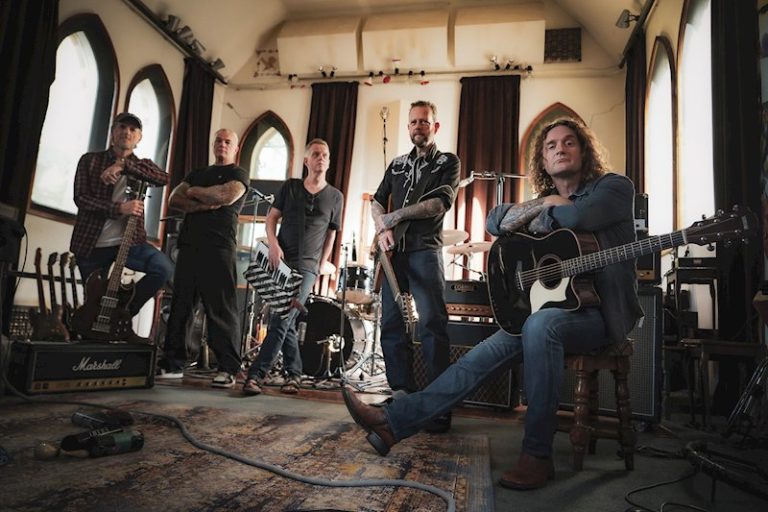
It is. We all, we all are very fortunate to come from musical families that understand what we’re trying to do. My grandfather was an old-time bluegrass fiddler and Dale’s dad’s a luthier, John learnt how to sing harmonies around the piano with the family. And Alex comes from musical family. His uncle is actually a really great drummer that was in a band called Super Fuzz and another band called Rufus Huff. He’s a great rock drummer. So to watch him drum is just like, it’s crazy, but he’s like the Ginger Baker of our area. That’s, kind of his, his drumming style.
Were you, were you pushed into it or just encouraged?
Just encouraged. It was something the family did every weekend. You know, my dad played guitar and, you know, I obviously played with my grandfather. So it was something the family did. And it’s like, well, if I’m going to go, you know, do this every weekend, I might as well get up there with them and, you know, make something useful out of myself. So,from, from eight years old I was on stage playing that type of music until I got my dad’s cassette tape collection and got into B.B. King and the Fabulous Thunderbirds. And that was over then.
And all I cared about was guitar from that point
You must have so many different influences?
Oh yeah, man. From, you know, from until I was a teenager, I don’t think I’d heard very much rock and roll or blues. I heard, you know, more traditional country music. And of course, the Headhunters were a big part of my childhood because they were friends of the family. So that, that type of rock and blues I was hearing, but far as really being exposed to things like Cream and Mountain that came later. But I think, I think I heard it at the exact time I was supposed to hear it and soak it up because it was just like, it was something just so radical. Like it, you know, it sounded like it was from outer space and when you hear something like that it really sticks with you.
What are you listening to at the moment?
Oh man, we listen, we listen to everything. I’ve been listening to Bobby Rush a lot. I got a chance to meet Bobby when the Headhunters played the King Biscuit Blues Festival and they introduced me to him. And he was like, did y’all ever cover any of my music? And I was like, no, Mr. Rush, we haven’t, but we’re going to start. So now in kind of honour of him, we play ‘Chicken Heads’ each night because it was so cool meeting him. He was, he was talking about Buddy Guy and he’s like, man, he said, Buddy Guy, he’s just a young buck. He said, I’m a couple of years older than Buddy Guy.
So, you know, Bobby’s one of the last original blues guys around and it’s great to see him, you know, be recognised. You know, he just did that album with Kenny Wayne Shepard and that opened even more doors for him. So, we listened to that.
Believe it or not, we listened to a lot of honky-tonk truck driving music after a show because it’s just such a great way to cleanse our palate a little bit so to speak. So we listened to a lot of Marty Stewart.
Of course, a lot, a lot of blues a lot of rock, classic rock stuff. We love Captain Beyond, Uriah Heep, and of course all the great Southern influences, Marshall Tucker, the Allman Brothers band, man, Gov’t Mule is really influential to us because they’re just like the perfect mix of everything we love.
I remark that Warren Haynes is an awesome guitarist, but he is also a fantastic singer.
He’s got such a beautiful voice. Yeah. And his memory and recall is amazing. I don’t know how he remembers and can play stuff just so effortlessly. And it’s just he has such a wide catalogue of stuff he can do.
John and I before we had brought the new guys into the band, we went and saw Gov’t Mule and went backstage to say hello to everybody. And Warren said, so what are you guys doing? You know, when, when are you getting back out there? And that was like the gas on the fire for us. Cause we’re like, you know if Warren’s asking, you know, what we’re up to, then we better get to doing something. So that was, that was kind of a big catalyst for us to say, hey, you know, Otis is still needed. Let’s get out there and do it.
He’s really such a nice guy. And, uh, you know, he listens to a lot of younger bands and, you know, sees what we’re up to.
I was doing a little bit of research and I was pondering, so you’re from Kentucky, where Kentucky Headhunters and obviously their offspring Blackstone Cherry are from but I looked at the other people that have come from Kentucky – Loretta Lynn, Chris Stapleton, Keith Whitley, Sturgill Simpson, Cage The Elephant, The Everly Brothers, The Judds.
I mean, there’s a list a mile long. It’s a fertile ground, isn’t it?
It is, man. And there’s a wide range of music and just the artists you mentioned.
But, you know, if you go back even, even further, you know, you’ll find Bill Monroe, which started the whole bluegrass movement. And the first slide guitar ever recorded was recorded in Louisville, Kentucky by a guy named Sylvester Weaver. And he was using a pocketknife as a slide. So, even the blues influence, goes back a long way. And I think it’s kind of like we’re right in the centre of the country. So, we get all the influences, you know, from all types of roots music.
So, it’s a cool thing. And you know, like with Chris Stapleton coming out of Kentucky and Tyler Childers, it’s really changed people’s view of Kentucky and what we bring to the table from a cultural standpoint.
Do you think that people were misinformed?
I do to some point. I think, people saw the bluegrass and country stuff and kind of thought that was as much as we could do, but it’s obviously not the case, you know, cause you know, the Headhunters came out with ‘Picking On Nashville’ in 1989 it kind of blew the doors open for country rock to take hold as a genre. And even before that in the seventies, they were in a band called Itchy Brother and had caught the attention of Swansong Records. Of course, we all about Swansong and they had a deal worked out and was going to do an album with Swansong and then John Bonham passed away and, you know, the whole thing kind of folded.
Are you a professional musician or do you have a ‘day job’?
For the most part, I guess I consider myself a professional musician. I mean, the only other thing I do is social media for the Headhunters and I’ll go out as a crew member with them if we’re not touring, but other than that, it’s music all the time.
And that’s the same with everybody else in the band?
Yeah, except for Alex, our guitar player, he works a factory job and John, our bass player is a machinist. His brother owns his own company, and he works for them, you know, designing things and running a CNC. But we’re lucky that we’re, you know, we’re pretty much able to take off and go play anytime we want.
We’re, we’re kind of doing the Weekend Warrior thing for the most part. I mean, we might do 10 weekday gigs a year, but I think that kind of speaks to our demographic too, because the people that enjoy our music aren’t able to get away on a weeknight and, and go stay out all night. You know, our people kind of live for the weekend. So do we.
Can we expect any more new music from you in the imminent future?
Definitely. We’re working very hard behind the scenes to try to get a full-length album out. And we already have songs, you know, already in the can recorded. They just need to be mixed and mastered. And of course we got plans to go back into the studio, but we’re talking to a couple of folks on getting the deal going to get a full length out there because that’s what people seem to want from us. So, that’s what we’re trying to do. It’s definitely time, man. If we had our way we’d do two albums a year, but it just takes so much money and so much legwork to make it possible. And we realised that we can’t do an album independently because that’s like bringing an elephant in your house. I mean, we just don’t have it. You know, it’s, all we can do to put out the singles successfully and try to put some marketing behind them.
So, in that respect, how, how do you feel about these people who knock out music in their bedrooms?
And I mean, I just think it’s soulless. It is to us, for what we like to listen to.
It, it does, it doesn’t do much for us. I love that people are creative and that they, that the technology’s there for them. I mean, if you can’t afford to go to a studio and do a full band project that you can, you can do, you can do something, you can express yourself. And I think that’s a great thing, but I think it’s really kind of disrupted the industry in a bad way.





+ There are no comments
Add yours