
By Lily O’Delia Onstage image is Isaac Harrell
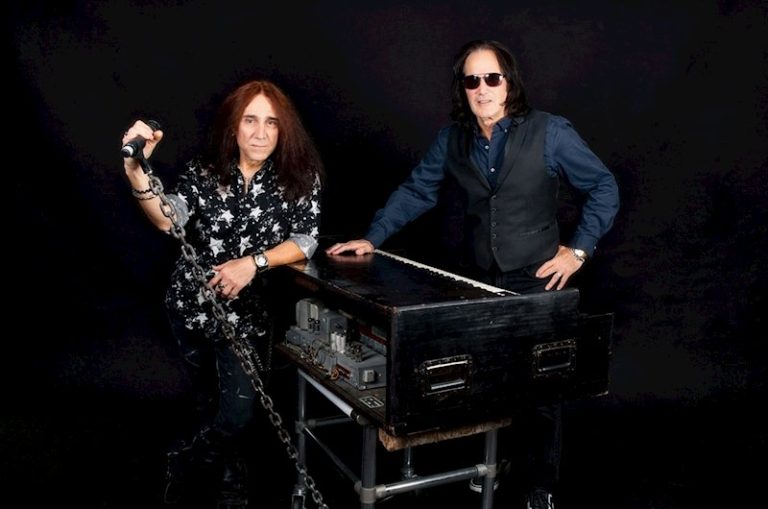
There’s something seriously enchanting about Charming Disaster. Since their formation in Brooklyn in 2012, Ellia Bisker and Jeff Morris have created a world that’s both eternally timeless and beautifully alive. Their songs include ghost stories, doomed love affairs, scientific oddities, and old myths, all conveyed with warmth, wit, and a touch of theatrical glitter.
The music may dwell in the shadows, but it never feels cold.
It rather brings you in with vivid narrative, complex harmonies, and a genuine love for the weird and wonderful.
Charming Disaster’s new album, The Double, plunges even further into that realm, serving up dissonance, a historical imagination, and songs that play out like short films. The record reveals the duo’s collaborative work at its most creative, rooted in a strong sense of trust, curiosity, and a willingness to pursue an idea wherever it may lead.
The music feels cinematic without being far away. It’s all put together really carefully, but also delightfully free and unexpected.
In anticipation of their performance at Pete’s Candy Store in Brooklyn on February 12 and ahead of a West Coast tour in March, Charming Disaster spoke with me about their evolution as collaborators, their love of the past, sweetness vs. unease, and how those who have never felt quite right within the world find refuge in their music in unexpected ways.
You’ve been making music together for many years now. How did you first meet, and at what point did you realise this partnership might grow into something more lasting than a casual collaboration? How has your creative dynamic evolved over time?
We met in a bar. This was back when we each had a large band of our own (Ellia’s Sweet Soubrette and Jeff’s Kotorino). Ellia caught Kotorino’s set, struck up a conversation with Jeff after the show, and an impulsive suggestion to try writing songs together soon snowballed into a side project that subsequently consumed our other projects (and our lives). Our collaboration as songwriters began as a back-and-forth exercise (like a relay race), but now tends to happen side by side (like a three-legged race). It’s a rare and special thing to be able to get into a creative flow space with another person—it requires vulnerability and a willingness to relinquish some control over your ideas. At this point we’re like a two-bee hivemind.
The Double feels like a project that unfolded slowly and intentionally. When did its earliest ideas take shape, and what was the arc from those first moments to the finished record? Is there a particular song that holds special meaning for you?
The oldest song on the album is “Scavengers”, which we wrote back in 2019—we originally thought it was going to go on Super Natural History, but we needed more time to get to know the song. We recorded these tracks in 2023 and 2024 and mixed everything in the early part of 2025. So if you measure from start to finish, this album represents a nearly six-year undertaking. A lot of our song crafting has a long arc, and the tracks included on this album overlap with our last two releases. One of our favourite songs on the album is “Haunted Lighthouse”, which we recorded with circus composer Peter Bufano and Broadway percussionist Mike Dobson, both long-time collaborators. We tracked it at Peter’s house, with each of us taking turns in the engineer’s seat, running up and down the stairs to the basement control room while everyone else played music or took on a producer role upstairs. We improvised the percussion out of random stuff from around the house and borrowed a ship’s bell from a neighbour who happened to have one next door. It was a really loose and fun process, and we think that comes through in the recording.
Your sound is often described as gothic folk or dark cabaret, yet there’s an undeniable warmth running through your music. Do those labels feel accurate to you, or do they fall short of capturing what you actually create?
Genre labels are a useful shorthand to communicate something about what we’re like and let people know if we’re likely to be up their alley – gothic because we explore dark subject matter and wear a lot of eyeliner, folk because we tell stories in our songs and play acoustic instruments, and cabaret because of our theatricality and playfulness. But as artists, we rarely think about what genre box a song fits into when we’re writing, and actually a lot of our songs don’t quite fit into what we’ve described. Eventually, as we evolve, we may need to update how we label ourselves. Still, it’s a vibe.
Many of your songs inhabit worlds filled with ghosts, crime, doomed romance, and myth. Did you always feel drawn to this dark kind of storytelling, or did it emerge naturally as your writing deepened?
We don’t think of our subject matter as being PARTICULARLY dark; it’s just what interests us. Also, doesn’t everybody love ghosts and crimes and poisons and underworld mythology? That said, OK, it’s true that our first extended conversation was about our dead cats, so in retrospect maybe that was kind of a tell.
There’s also a strong sense of earlier eras in your work — Victorian influences, folklore, classic noir. What originally attracted you to those worlds, and what keeps calling you back?
There’s a lot of good stuff back there (this is why we made a time machine for The Double). Truly though, there was a confluence of really interesting ideas happening around the turn of the late 19th/early 20th century: new scientific advances, strange supernatural beliefs, and revolutionary social changes, at the same time that people still had a direct connection with the folkloric traditions of the past. So you get a lot of overlapping worlds and stories: scientists and séances, mythology and technology, superstition and new discoveries like radio and electricity. There’s so much material to draw from.
Your harmonies often balance beauty with unease in a really striking way. Is that tension something you consciously design, or did it arise organically as part of your musical identity?
That tension is intentional and is baked into our DNA as a band. Even our name, Charming Disaster, flirts with the juxtaposition of lightheartedness and darkness. Musically, we’ve gotten increasingly interested over time in exploring dissonance and unexpected intervals in our harmonies, and also in more complex rhythms. Creating new challenges keeps things interesting.
What are some of your favourite things about living in New York City?
E: The subways never stop running, you can go shopping for groceries late at night, and there is a sufficient density of interesting, creative, talented people that the odds are very good for serendipitous encounters that alter your destiny.
J: The richness of international culture that you get to experience, from music to food to art and institutions to meeting people from all over the world from all walks. And I think there’s still a feeling that we’re all in this together.
You’ve stayed true to your own artistic instincts rather than chasing trends. Have you ever felt real pressure to make your music more mainstream and less niche?
Wait, niche? We thought this WAS mainstream…maybe this explains why it’s been so hard to sell out (we’ve been trying for the past 13 years).
Your songs feel vividly cinematic, as though they already exist inside their own films. If one track were adapted for the screen, which would you choose — and what kind of movie do you imagine it becoming?
We think “Days Are Numbered” would make a fun heist/spy/romance movie, like Ocean’s Two meets Mr and Mrs Smith meets To Catch a Thief. Preferably it would be directed by Wes Anderson (or undead Howard Hawks, if we can get him). In the meantime we’ve been working with a comic artist, Joe Haines, to adapt “Belladonna Melodrama” into a heist/spy/romance comic book. Stay tuned!
Folk music carries a long tradition of dark, cautionary tales. Do you feel connected to that legacy and see yourselves as subverting it, or do you approach storytelling on your own terms?
Lord knows we’re not in the business of dispensing morals, and we never seem to learn our lesson either. It’s true that we have an album called Cautionary Tales, but our relationship to that side of folk music is more about a certain relish for the “grim and gory” (as Andrew Bird says in his song “Measuring Cups”) than it is about either subverting or continuing that tradition.
After years of touring and building a dedicated following, what do you think people most strongly connect with when they first encounter your music?
We have a certain tongue-in-cheek approach to the macabre that is both playful and serious. We put a lot of thought into our music-making, our songwriting, and our presentation, doing the most we can do with just two people. We imagine there aren’t a lot of songs out there for people who are obsessed with, say, manta rays or poisonous plants or Marie Curie, so that’s something unique we offer. And we’re pretty accessible and nice, meaning we appreciate connecting with people and we try not to be jerks, so maybe that comes through somehow too. If you come to one of our shows, we might friend-matchmake you with another one of our fans.
Your work seems to offer a sense of belonging to people who don’t always feel at home in this world. When you first started out, did you ever imagine your music might become that kind of refuge for others?
We never imagined at the beginning that our music would be a sanctuary for anyone but ourselves. But over time we’ve come to realise that creating space for a certain kind of oddness is really powerful, because it lets all the people in the room with us (literally or figuratively) clock each other as compatriots and hopefully feel safe and embraced, and most importantly, not alone.
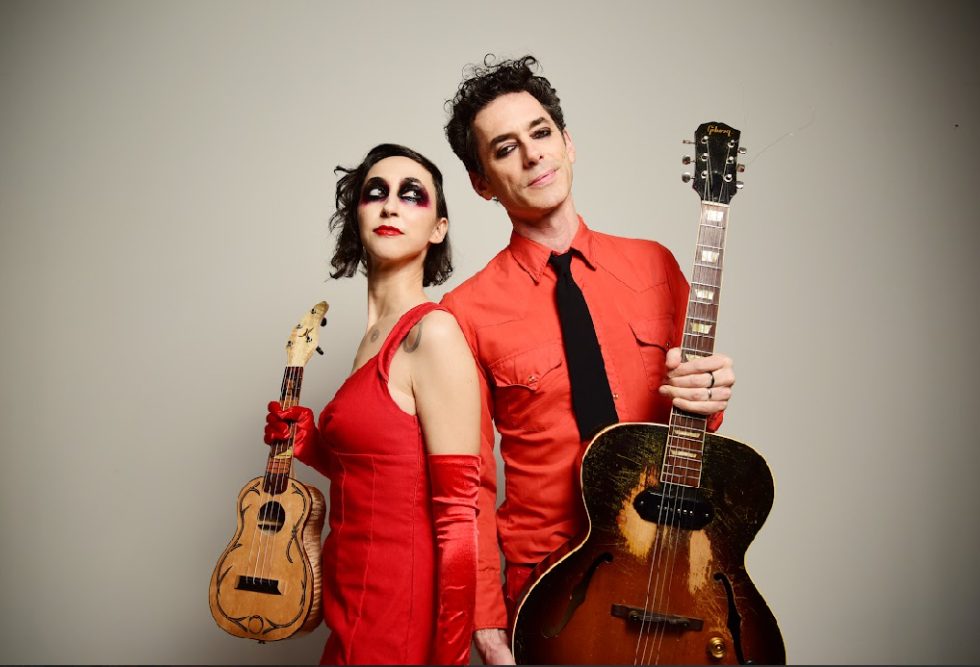
Image by Shervin Lainez.



+ There are no comments
Add yours