Review By Ian Walker
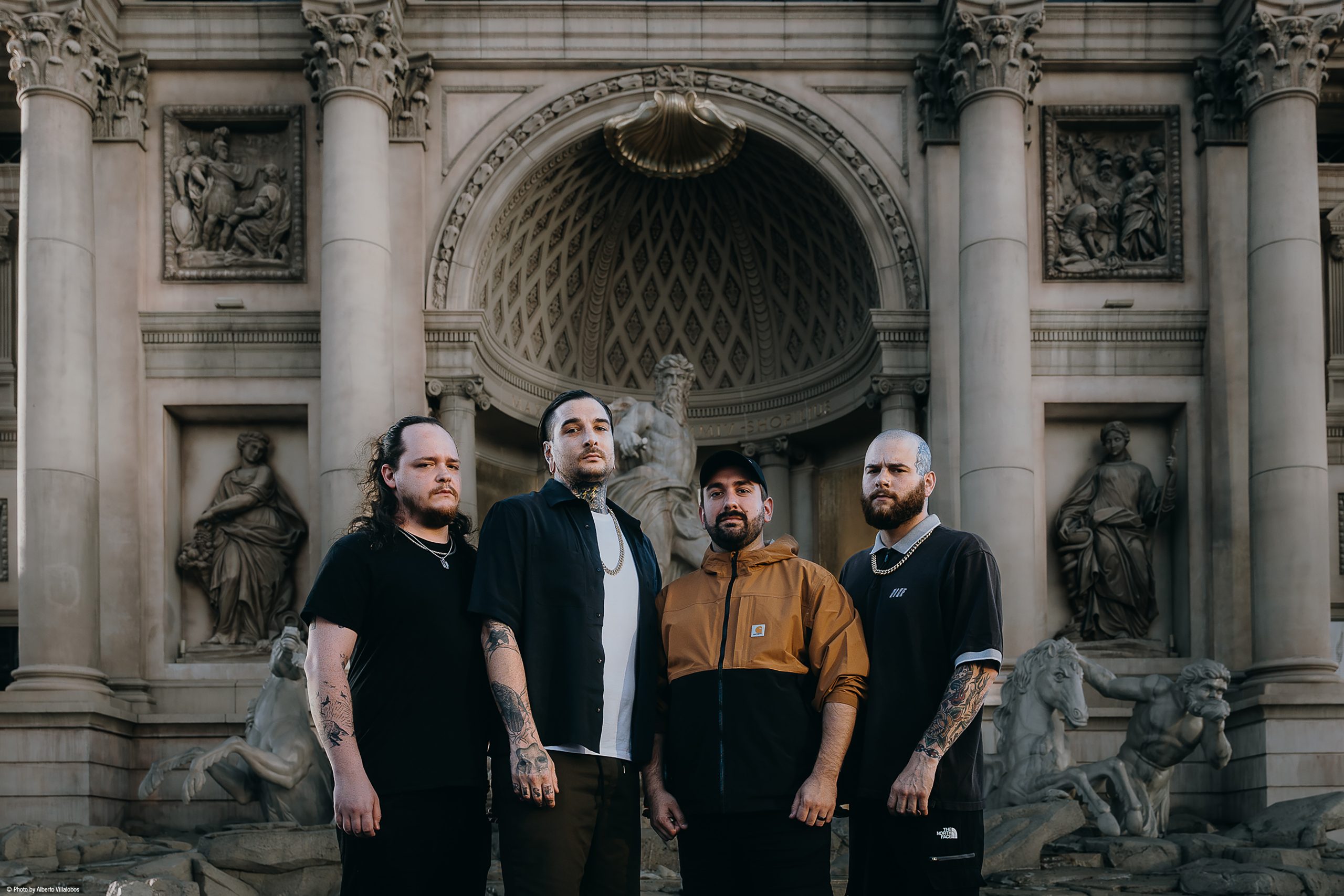
With their sixth full-length To Rid Myself of Truth, Pittsburgh deathcore giants Signs of the Swarm have taken rage and vulnerability, stripped them down to the bone, and fused them into an unrelenting 11-track beast. Due out August 22 via Century Media, the album sees vocalist David Simonich, drummer Bobby Crow, guitarist/backing vocalist Carl Schulz, and bassist Michael Cassese pushing their sound into darker, sharper territory—while never losing the crushing weight that’s made them a dominant force in the extreme metal scene.
From the first seconds of opener “To Rid Myself of Truth”, Simonich sets the tone with his cavernous growls, channeling the personal demons he’s finally decided to confront head-on. It’s more than just an album title—it’s the statement of a man who’s done hiding behind metaphors. His Stargardt disease diagnosis, battles with addiction, and brushes with suicide fuel the lyrical core here, turning every guttural scream into both a purge and a weapon.
The transition into “HELLMUSTFEARME” is a jolt of pure death metal fury. Crow’s blast-beat assault propels Schulz’s serrated riffs while Simonich unleashes a venomous refrain that feels as much a personal exorcism as a war cry. Written with a “be more pissed” mandate, it’s the perfect demonstration of the band’s shift toward sharper, more aggressive arrangements compared to the djent-tinged bounce of their earlier work.
“Natural Selection”, road-tested on tour with Chelsea Grin, keeps the momentum going with an “every man for himself” savagery. Simonich’s delivery cuts through like shrapnel, his metaphor for the modern political climate underscoring the chaos in Crow’s double-kick maelstrom. The track thrives in its balance between groove and brutality—a reminder that Signs of the Swarm can write mosh-pit anthems without sacrificing depth.
The emotional weight really hits with “Scars Upon Scars”, where Simonich openly addresses his recovery from addiction for the first time in his career. There’s no romanticizing here—only raw confession over riffs that lurch and writhe like the past he’s trying to outrun. It’s a moment of brutal honesty that makes the title To Rid Myself of Truth feel even more cutting.

Things take an ominous turn with “Chariot”, a mid-tempo stomper that grinds forward like a war machine. The track’s pacing allows Cassese’s bass work to really breathe, adding depth beneath Schulz’s jagged guitar layering.
One of the album’s standout moments arrives with “Clouded Retinas”, featuring Will Ramos of Lorna Shore. Ramos’ feral highs spar perfectly with Simonich’s subterranean lows, and given the song’s direct reference to Stargardt disease, it lands with chilling authenticity. The interplay between the two vocalists creates a tension that never quite resolves—just like the condition itself.
On “Iron Sacrament”, Phil Bozeman of Whitechapel joins the fray for a no-holds-barred deathcore slugfest. There’s no subtext here—just an unrelenting sonic bloodbath where Bozeman’s bite adds another layer of venom to the band’s arsenal.
After the guest-vocal heavy mid-section, “Forcing to Forget” pulls things back to the core four, offering a dynamic rollercoaster of tempo shifts and suffocating breakdowns. The song’s title speaks for itself—a desperate struggle to push down memories that refuse to fade.
“Sarkazein” is perhaps the album’s most unpredictable cut. There’s a manic energy in Crow’s drumming, punctuated by sudden bursts of dissonance from Schulz. It’s the kind of track that feels like it could collapse under its own chaos at any second—yet never does.
“Fear & Judgment” sees the band joined by Jack Murray (156/Silence) and Johnny Crowder (Prison, ex-Dark Sermon). The track grooves hard, but its lyrical focus on prejudice and societal division gives it a thematic heft that elevates it beyond pure aggression. The three vocalists each carve out their own space, creating a layered attack that’s as thought-provoking as it is punishing.
The closer, “Creator”, distills everything To Rid Myself of Truth stands for: personal reckoning, all-out rage, and a refusal to pull punches. Simonich sounds like he’s standing on the edge of a precipice, screaming into the void—not to be heard, but to finally release what he’s carried. Crow hammers out one last relentless barrage, Cassese and Schulz locking in tight for a finish that feels both final and unresolved, as though the truth Simonich is ridding himself of will continue to echo long after the record stops.
What makes To Rid Myself of Truth so gripping isn’t just its heaviness—though there’s no shortage of that—it’s the vulnerability that pulses beneath the blast beats and breakdowns. Simonich’s willingness to openly discuss his health struggles, addiction, and past suicide attempts gives the record an emotional core rare in a genre that often hides behind cryptic lyricism.
Bobby Crow’s decision to scrap much of the early material and rebuild with a “more pissed” mindset pays off in spades. The drumming is ferocious without feeling over-stuffed, driving each track forward with precision. Schulz’s addition to the lineup proves invaluable—his riffs are both technically sharp and atmospherically rich, and his backing vocals add a second dimension to Simonich’s already formidable presence. Cassese’s bass work might not always be in the spotlight, but it’s the glue that holds the chaos together, grounding the album’s most volatile moments.
To Rid Myself of Truth is also a testament to the band’s resilience. Whether it’s stepping up to headline tours at the last minute, recruiting powerhouse guests, or evolving their sound without losing their identity, Signs of the Swarm continue to thrive under pressure.
In a scene where quick-hit breakdowns and viral moments often overshadow substance, this record is a declaration that depth and ferocity can—and should—coexist. It’s deathcore that isn’t afraid to be both unflinchingly heavy and unflinchingly human.
When the final notes of “Creator” fade, you’re left not with the memory of one or two standout “parts,” but with the lingering impression of an entire body of work built on authenticity, rage, and survival. Simonich’s scream—born from pain, sharpened by experience, and delivered with surgical precision—becomes the embodiment of the album’s mission.
For Signs of the Swarm, To Rid Myself of Truth isn’t just another entry in their discography. It’s a milestone—one that confronts the darkest parts of the self, tears them apart, and rebuilds with sharper teeth.









+ There are no comments
Add yours