By Lily O’Delia
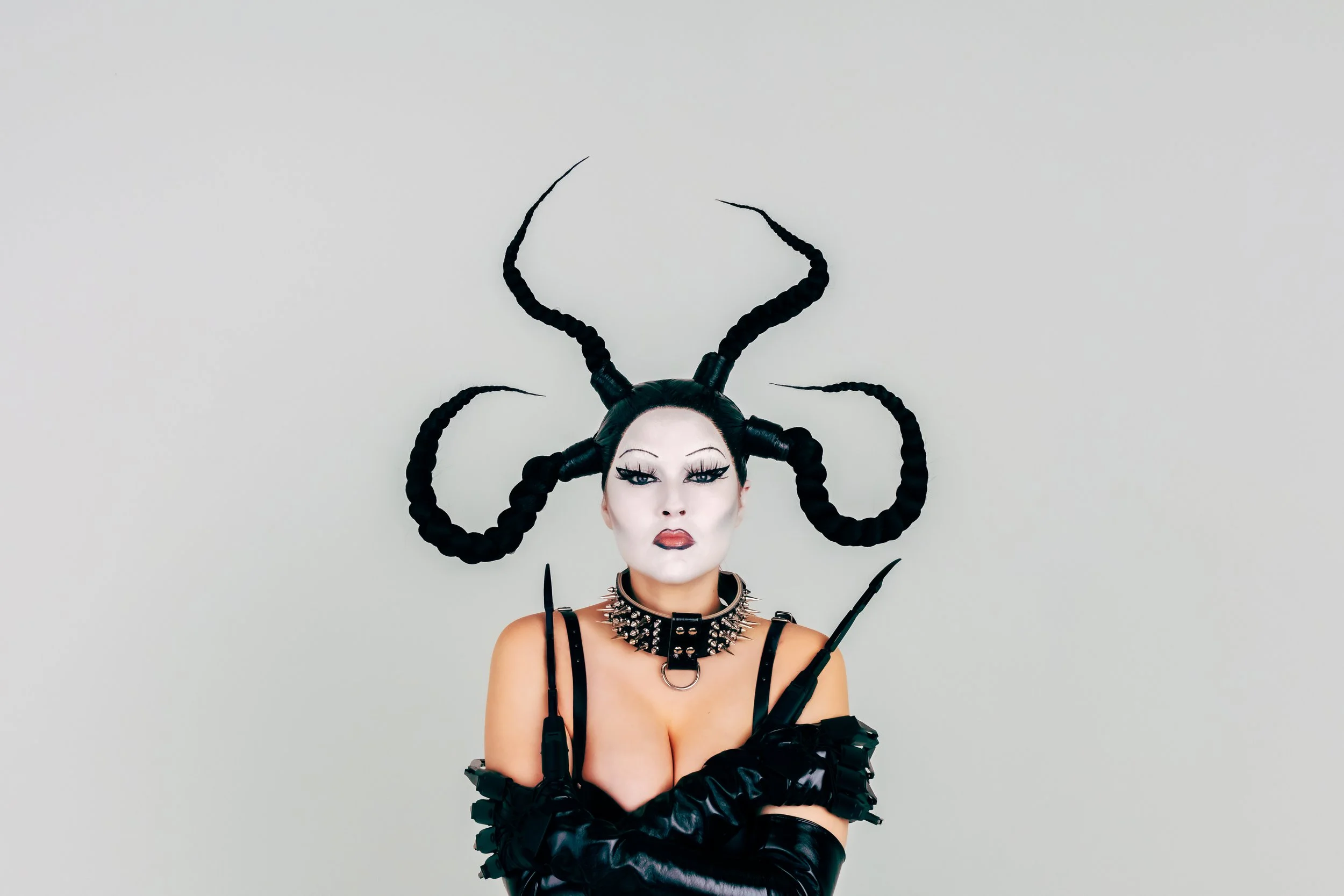
Dark pop artist EMM, performing under the moniker BLACK DIAMOND, creates music that directly confronts religious conditioning, systemic patriarchy, and the music industry itself. Raised in a far-right evangelical environment in Traverse City, Michigan, prior to moving to NYC, her work serves as a sonic rejection of purity culture and traditional expectations. Now navigating the industry as an independent, neurodivergent artist, EMM’s DIY approach and outspoken stage presence have garnered both a dedicated fanbase of self-described outsiders and a steady stream of online critics.
Below, she discusses her creative process, the financial realities of staying independent, and how understanding her AuDHD has reshaped her perspective on her career.
How old were you when you started experimenting with music, and why do you think you took that creative path?
I remember writing down my first song around 5 or 6, and writing chords with it on the piano. I just always knew I was born to do what I’m doing. It was never a question really. It’s too natural to me to do anything else.
The first time you popped up on my algorithm, it was for the song ‘Funeral Home,’ where you take the word ‘psycho’ and turn it into a commentary on the impossible standards, misogyny, and emotional damage women are expected to absorb. The song feels both deeply personal and socially confrontational. How did writing it come about?
I usually write from a flow state and try not to over-analyze it in the moment. I think it was probably a build-up of a lot of rage floating around in my aura for a while that needed to be channeled, and that’s what came out.
Growing up in a far-right evangelical environment and then stepping into a version of yourself that openly challenges patriarchy and purity culture is such a dramatic transformation. Was there a specific moment or experience where you realized you could no longer live within the beliefs you were raised with, and how has that journey shaped the way you perform and write music today?
It was a million tiny moments of seeing cracks in the system, I think. And just having the courage each time to let myself ask questions and be open to answers, even if it was an answer that was different from what I was taught. It was a huge act of faith for me to keep making music and art that was bold when I had the threat of hell and shunning looming over me all the time.
I just realized I’d rather be wrong in overestimating the grace, understanding, compassion, and love of the divine than wrong in overestimating the harshness of the divine. I still pray constantly and am still very much in touch with the force greater than myself and being guided by it. I just don’t obsess over the ego-games of labels and rules and religious bullshit. And I trust that yes, I will absolutely make mistakes, but that doesn’t mean I’m not being led, guided, and used through everything I’m doing.
What are some of your influences?
Iconic, timeless performers. Women that don’t shut up or play small. Fashion that makes people uncomfortable. Art that confronts.
Women’s rights seem to be a core focus for you. As an autistic woman, how long have you had this special interest and where did it begin?
I’ve been like this since I can remember. Literally, I remember being like 5 on the playground and being mad the boys said I couldn’t climb the jungle gym because only boys could do it. I think too, growing up in church and with sexual abuse or objectification of young girls always being blamed on us, I saw the patterns really quickly.
Now that you understand yourself more deeply through your autism, PTSD, and ADHD, do you feel like the characters and worlds you create in your music were always a subconscious way of translating emotions you couldn’t safely express as yourself?
100% yes!
What are some of your guilty pleasures?
A really good mocha or Chai. Rewatching Lord of the Rings or The Office. Mochi donuts. Alien and conspiracy Subreddits.
You have famously used your “hater” commentary to inspire your social media posts. What made you decide to turn negative feedback into something creative, and why do you think you attract that kind of pushback?
Honestly, I just needed content and it was easy and quick to make, and people connected to it. I hope it shows people that it doesn’t matter what anyone says about you and you shouldn’t let it stop you from slaying regardless. I think people hate me more than an average person for a lot of reasons, but most of it has to do with me being Autistic and just not being willing to shrink or be quiet to please anyone.
You’ve talked about how saying “fuck ICE” onstage in the South immediately affected merch sales. Instead of retreating, you doubled down, noting that the South is exactly where you feel called to perform because of the stories women share with you there. How do you balance the real financial cost of speaking out with the responsibility you feel toward making those women feel seen, and have you ever questioned if it’s worth it?
Honestly, it’s been very challenging financially. I’ve sacrificed a lot. But again, going back to trusting the path, this is what I was led to do. And I’ve seen divine provision pop up the whole way. So I expect that to continue and increase and move me into profitability.
As far as it being “worth it,” I think a lot about if I’m harming myself by not being quieter—because a lot of times the girls who quantum leap into super-stardom because the industry takes a liking to them don’t speak up about anything that really matters. Industry people like that, because those girls are less likely to risk their paycheck and they have families to feed. So I get it. I know I’m built for stadiums and a very long career. But I just can’t stomach the idea of not being “one of the people,” for lack of a better term. I am inherently anti-system. It’s in my bones. And I just was born with a big mouth. But Madonna gives me hope because she won and I’m a lot like her in that way.
What is your favorite place and why?
I love my hometown, Traverse City, MI. It’s beautiful and I feel the most creative there.
You’ve built a fiercely independent, DIY career after walking away from traditional industry channels. Why did you decide to bypass the gatekeepers, and why is it equally important to you to remain directly accessible to your fans on tour rather than keeping your distance?
I just kept getting signed and dropped and dragged around by men who promised me things they never delivered. By the end of it, I was “damaged goods.” But I realized, I’m still here. I’m not going to just disappear because a bunch of suits want me to. I’m going to do what I’m here to do whether or not I’m famous. I’m going to get my own money, figure it out, and learn to do it myself. When the right people arrive, they arrive. In the meantime, I’m doing me.
Part of that means rejecting the “I’m better than you” energy so many people use as a business model. They’re creating mystique or whatever, and I get that—boundaries and all that. But I don’t want to be better than anyone. I just want to sing and help people where I can. I didn’t go through 17 years of shit and growth to act like I’m hot shit and not be impactful. I want to hug people and encourage each other. We are all going through hard shit, so we need each other. That’s what shows are all about. I want to be there for them as much as they are for me for as long as I possibly can.
You’ve described feeling like an outsider your whole life. Does building this independent success and connecting with so many women change that feeling at all?
Hmm, sometimes it does. Sometimes it doesn’t because I’ve been so rejected by the industry. I’m grateful that other outsiders can connect to me and I can create safe spaces at shows for us.
Let’s talk about the Lady Gaga comparisons. How do you feel about them?
There is no one I would be more honored and grateful to be compared to!
What’s next for you?
More touring. BLACK DIAMOND II. Iconic lewks. Universal domination.




+ There are no comments
Add yours